
Across several cities in northeastern Syria, thousands of people demonstrated for the constitutional recognition of Kurdish rights, an end to attacks on Rojava, and the protection of the social gains of the revolution. Protests took place in Qamishlo, Heseke, Derik, Amude, and other areas. Participants reaffirmed their determination to defend the self-administration through civil resistance.
The demonstrations were held under the common slogan “Our unity is our existence.” Addressing the Syrian transitional government, participants demanded in particular the recognition of the Kurdish language and identity, legal guarantees for women’s rights, and assurances of freedom and security within the Syrian state framework.
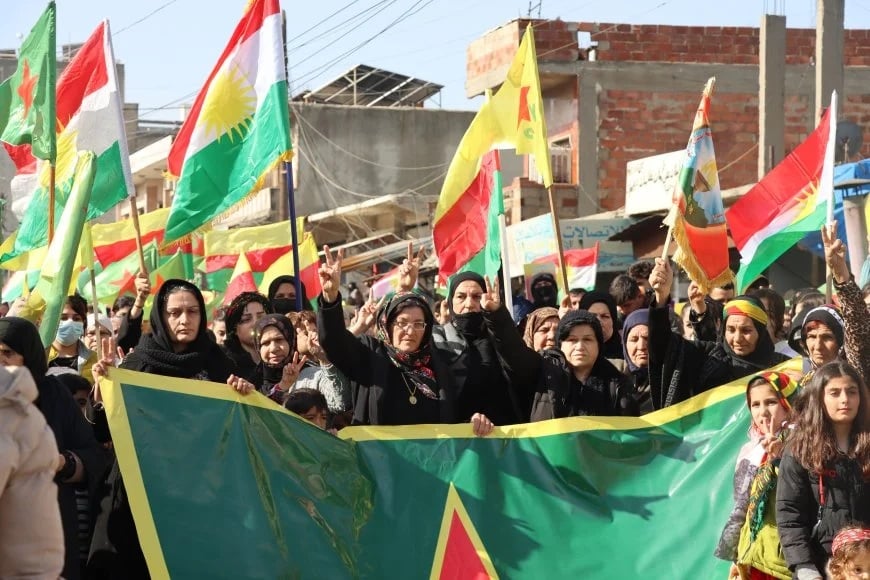
Heseke
In Heseke, large crowds marched under banners reading “Our language is our identity” and “Long live the resistance of Rojava.” At the final rally, the co-chair of the Democratic Union Party, Ferhan Dawûd, spoke about the historical roots of the Kurdish people and called for an end to systematic exclusion, stating that Kurds are not guests in the country but among its most ancient inhabitants.
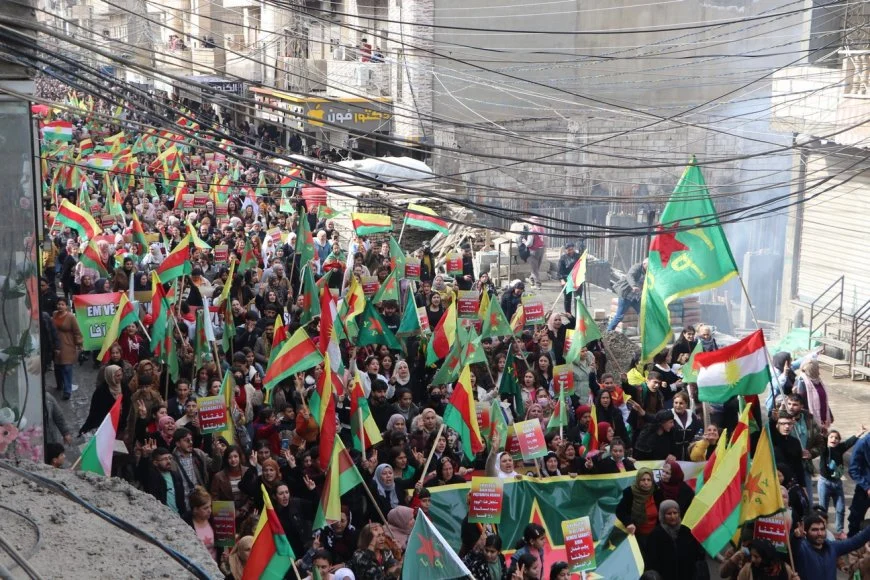
Qamishlo
The largest demonstration took place in Qamishlo, with participation from surrounding areas such as Tirbespiyê, as well as many displaced people from Afrin and Shehba. The protest was organized by a broad civil society coalition. Ebdulkerim Saroxan, a representative of the People’s Initiative, said that the Kurdish people will no longer be deceived and stressed that genuine equality begins with constitutional recognition. He added that the revolution is not a local event but part of a global struggle for freedom.
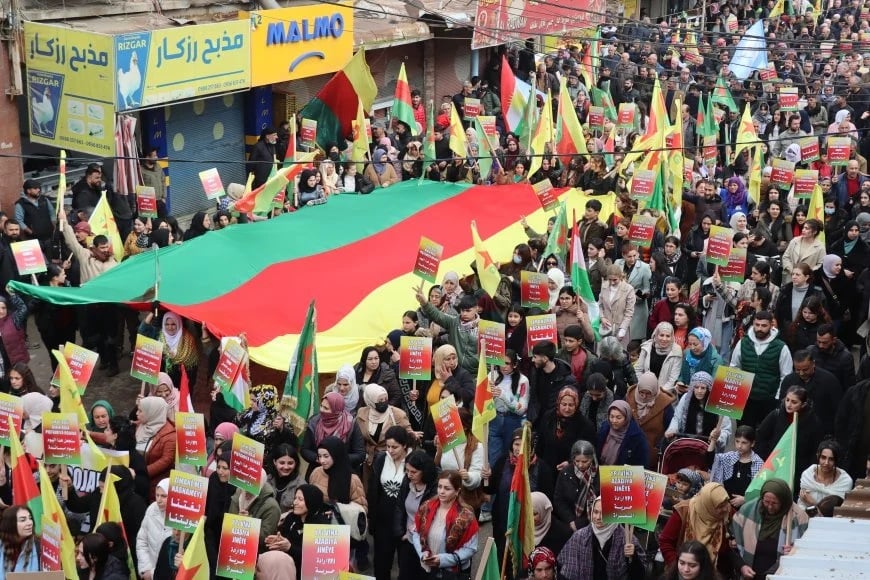
In all cities, the slogan “Jin, Jiyan, Azadî” (Woman, Life, Freedom) was repeatedly chanted. Many speakers called on the international community to live up to its moral and political responsibility toward the Kurdish people. In Rimelan, Derik, Girkê Lêgê, and Amude, women’s organizations such as Kongra Star emphasized that any political solution in Syria can only be sustainable if women’s rights are placed at its center. One of the speakers said that peace remains mere rhetoric without legal guarantees for language, culture, and equality.
Leave a Reply