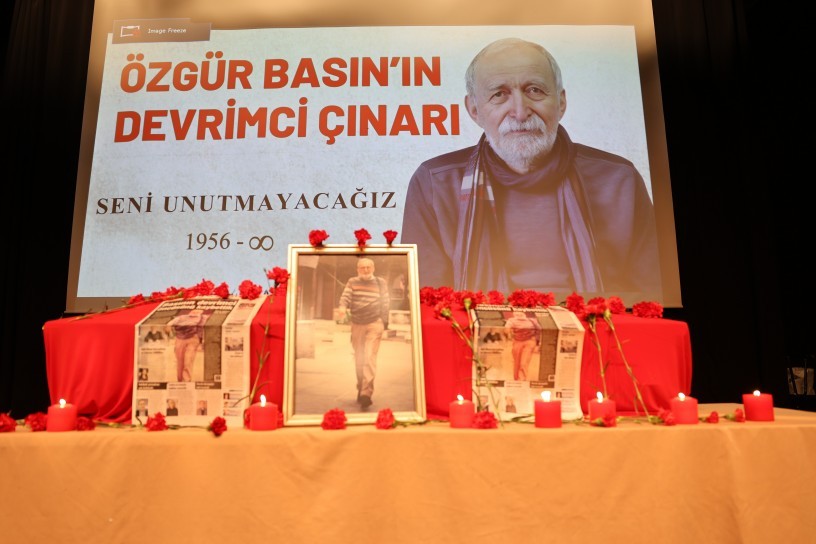
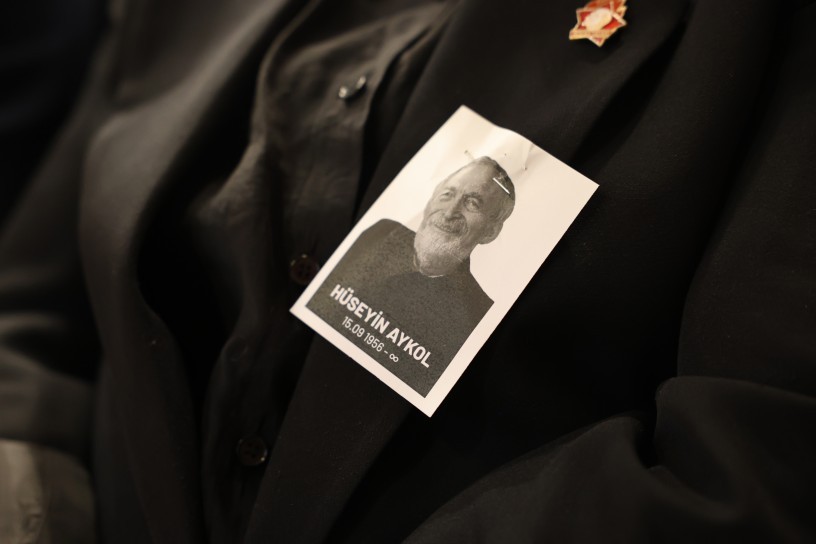
In Ankara, colleagues, friends, relatives, and political companions bid farewell to journalist Hüseyin Aykol. The co-founder of several Kurdish newspapers and a symbolic figure of the free press in Turkey died on New Year’s Eve at the age of 73 as a result of multiple brain hemorrhages. Aykol was considered a tireless champion of press freedom, human rights, and social justice.
“The revolutionary plane tree of the free press – we will not forget you”
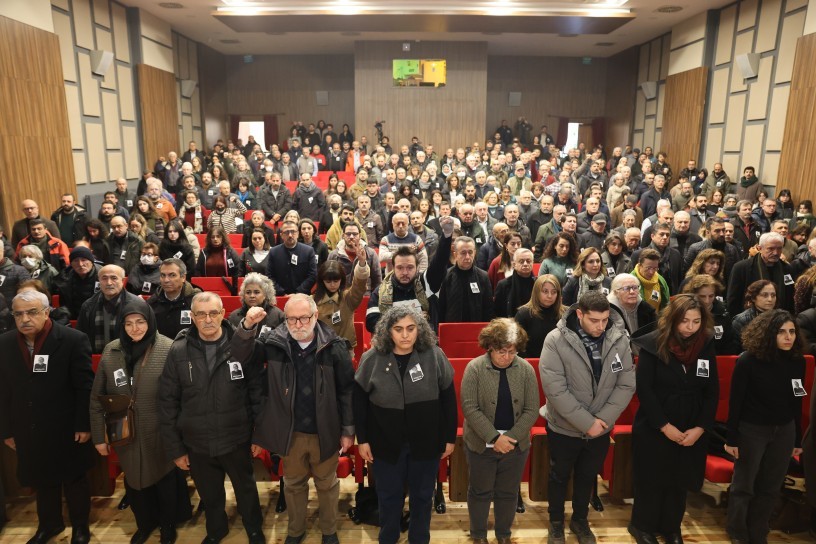
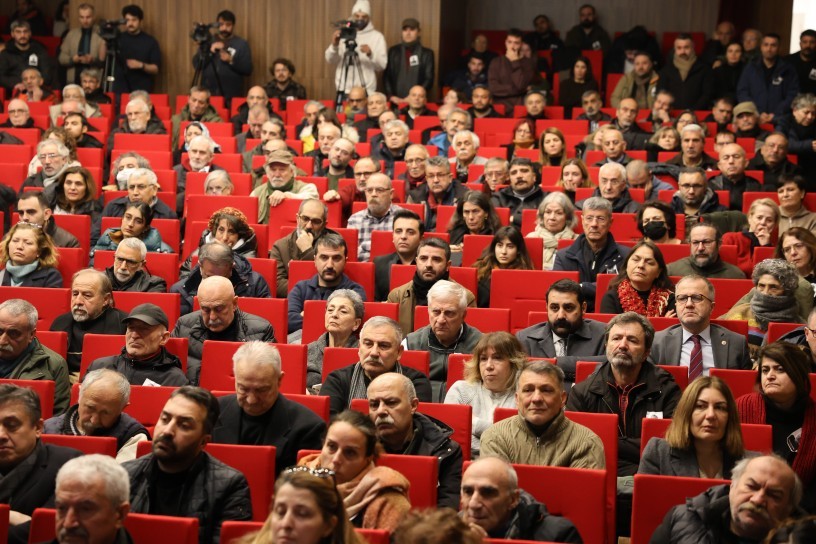
The funeral service took place in the Yılmaz Güney Cultural Hall in Ankara. Aykol’s coffin was carried onto the stage by his comrades, covered with red carnations. A banner with the words “The revolutionary plane tree of the free press – we will not forget you” adorned the hall. The ceremony was attended by numerous journalists, members of media unions, and politicians, including the co-chair of the DEM Party, Tuncer Bakırhan, TJA activist Sebahat Tuncel, representatives of the Dicle Firat Journalists’ Association (DFG), and the Disk Basın-İş union. Many former comrades from the left-wing press and cultural movement were also present.
In a message read aloud, colleagues honored Aykol as “Mamoste” – a teacher figure of the free press. They said he always felt committed to the weak, even in prison or under torture, and raised his voice for others. His work was characterized by modesty, adherence to principles, and tireless dedication, the message underlined.
37 years of commitment to the free press
The message pointed out that Aykol worked as a journalist for 37 years under the most difficult conditions—in an environment marked by censorship, repression, and persecution. Even after imprisonment, trials, and attacks on editorial offices, he did not give up his convictions. Even into old age, he was the first to arrive at the editorial office every morning, where he made tea, read letters from prisons, and wrote articles for both those outside and inside. The speech ended with a promise: the responsibility for freedom of the press that Aykol carried will now be taken up by a new generation, conscious of the gravity and significance of this legacy.
Message from Abdullah Öcalan read aloud
In a written message sent from the Turkish prison island of Imrali and read aloud by lawyer Faik Özgür Erol, Kurdish leader Abdullah Öcalan praised Aykol as a very dear friend and comrade. “We have lost an intellectual who became the voice of truth, a journalist, and an irreplaceable revolutionary and internationalist leader. Throughout his life of struggle, with his words, his pen, and his stance, he was always a guiding pioneer, an exemplary revolutionary,” Öcalan said.
Bakırhan: “He didn’t owe us anything, we owe him”
In his speech, DEM Party co-chair Tuncer Bakırhan recalled his decades of work with Aykol, who, he said, carried out his work with discipline, dedication, and a clear political compass. Citing Aykol’s remarks that he owed the Kurdish people, Bakırhan said: “You don’t owe us anything, we owe you. We will repay that debt by creating a free and democratic country, where all peoples and religious communities live as equal citizens.”
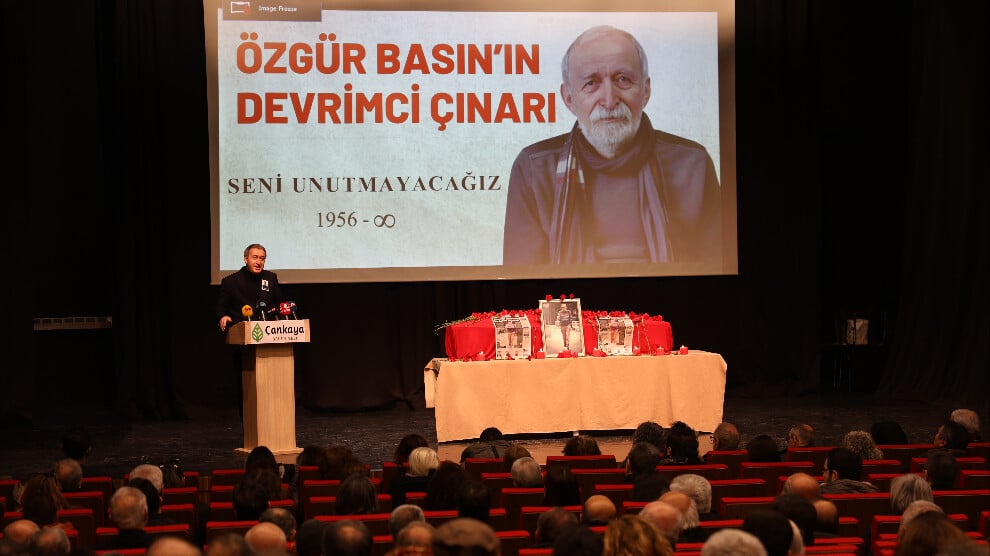
“Hüseyin was like a river that flows quietly but shapes its surroundings”
Journalist Aytunç Altay recalled Aykol’s early years in political activism, his imprisonment and torture, and his unbroken return to journalistic work. Aykol, he said, never made compromises that would have compromised his integrity.
Journalist Haydar Ergül praised Aykol as a “socialist figure with a history of resistance spanning more than 70 years: “His role in the history of the Kurdish press was just as influential as his continued involvement in a political movement that drew on figures such as Kemal Pir and Haki Karer. Aykol was a person whose calm manner moved entire structures – like a river that flows quietly but shapes its surroundings.”
Final journey with favorite song
At the end of the ceremony, Aykol’s favorite song was played – “Caravansary” by Japanese artist Kitaro. His coffin was then accompanied by applause from colleagues and friends to the Karşıyaka Cemetery for burial.