
Fourteen years after the massacre by the Turkish army in the Kurdish village of Roboski in Şırnak province, various organizations are drawing attention to the continuing impunity of the perpetrators. In the bombing on December 28, 2011, as many as 34 civilians, including 19 minors, were killed in targeted air strikes. Students, civil society groups, and DEM Party deputies called for a legal investigation ahead of the upcoming anniversary, describing the massacre as a “litmus test for the credibility of current peace efforts.”
In Amed (tr. Diyarbakır), students from Dicle University organized a memorial demonstration with banners and slogans such as “Roboski is our wound—their memory is our light.” The police initially tried to stop the protest, but had to bow to the determined stance of the participants.
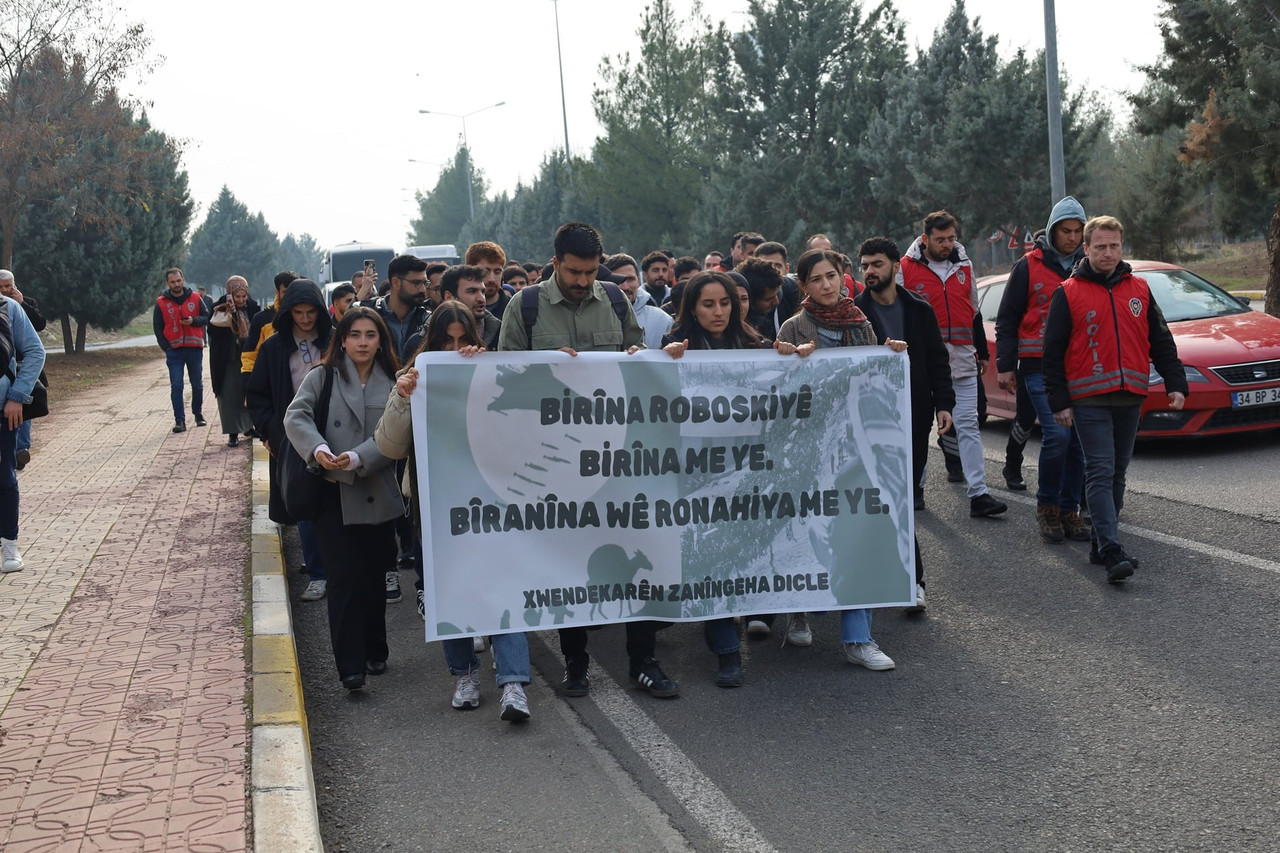
Student Sidar Kiye, who gave the closing speech, spoke of a “painful symbol of the logic of war against the Kurdish population.” Kiye criticized the fact that the judiciary has still not taken any action: “The military prosecutor’s office spoke of an ‘unavoidable mistake,’ the civil courts dismissed the case, and the Constitutional Court and European Court of Justice rejected the appeals. The perpetrators were protected, not prosecuted.”
Kiye pointed out that Roboski is not just an isolated case, but part of a long chain of unsolved acts of violence – from “33 bullets,” the shooting of Kurdish smugglers in 1943 on the orders of a Turkish army general in Van, also known as the “Muğlalı incident,” to the Dersim genocide in 1937/38, to the ISIS attacks in 2015 in Suruç and Ankara.
“In 2025, Abdullah Öcalan’s call for peace, the PKK’s declaration of a ceasefire, and a parliamentary initiative offered new glimmers of hope. But without coming to terms with the past, the peace process remains incomplete. Roboski is the litmus test: without justice for the victims, all rhetoric of peace remains hollow.”
Victims also commemorated in Dersim
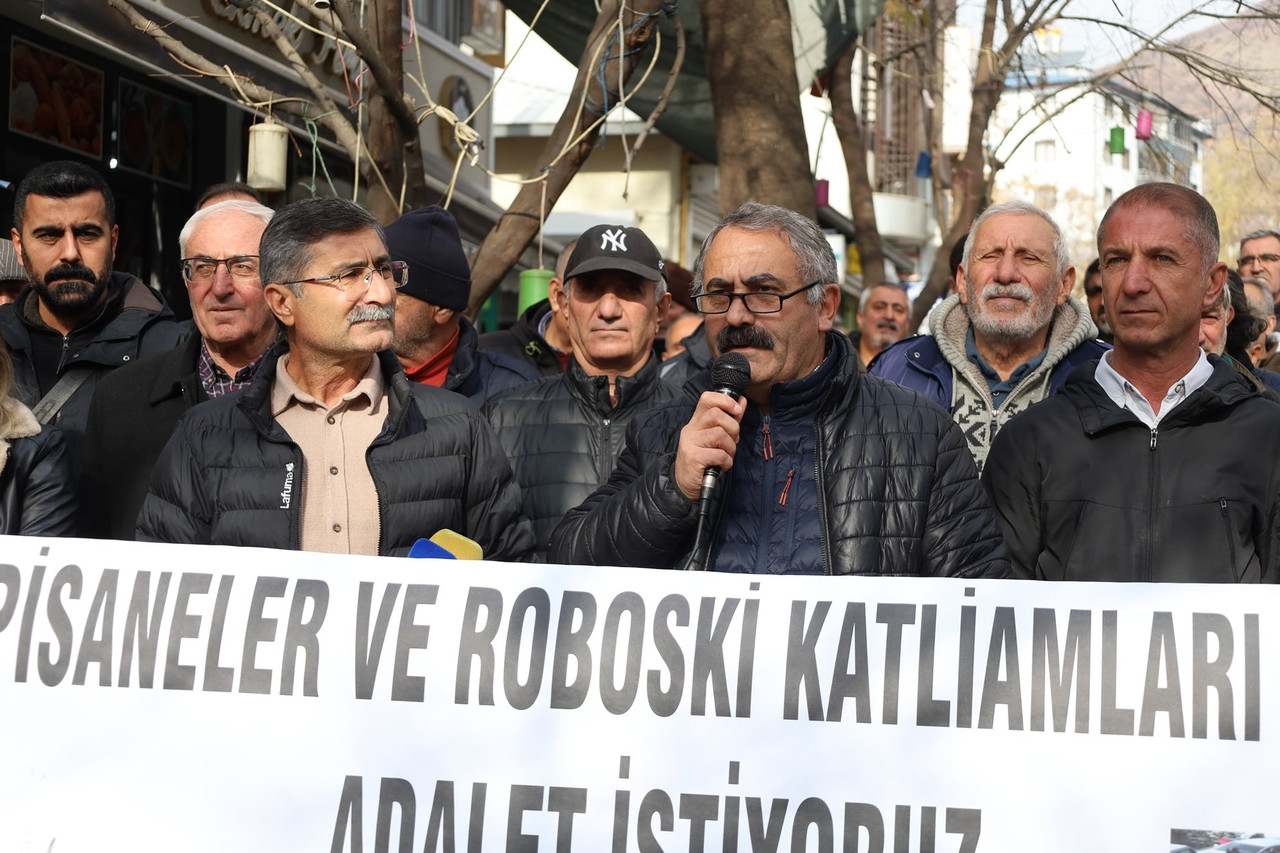
In Dersim (Tunceli), the local platform for labor and democracy organized a memorial event calling for the pogrom in Maraş and the massacres in Turkish prisons in 2000 and in Roboski to be investigated. Banners read: “We want justice – Roboski must not be forgotten.”
Orhan Çelebi, member of the Central Committee of the Socialist Party of the Oppressed (ESP), spoke of a “systematic disregard for the right to life” by state actors.
“The inaction of public prosecutors and courts, the discontinuation of proceedings, and the protection of those responsible are no coincidence, but part of a deliberate policy of impunity. Even today, Kurds, Alevis, and left-wing activists are systematically discriminated against or treated repressively,” Çelebi continued. “While Kurds suffer from security measures and collective punishment, Alevis experience exclusion in public spaces. Left-wing and revolutionary forces are particularly targeted by isolation measures and restrictions on their rights in prisons.”
DEM Party submits motion to parliament
In the meantime, DEM Party MPs Newroz Uysal Aslan and Mehmet Zeki Irmez submitted a motion to the Turkish parliament on the anniversary of the Roboski massacre. The MPs called for a comprehensive parliamentary investigation into the events of December 28, 2011, when four Turkish F-16 fighter jets bombed a caravan of 34 border traders who were returning to their village of Roboski from southern Kurdistan (northern Iraq) with their mules, a few cans of diesel fuel, tea, and sugar. The villagers—aged between 13 and 38 at the time—were just walking along the narrow paths of the mountainous area on the Turkish-Iraqi border when the bombing began at 9:37 p.m. and did not end until 10:24 p.m. Twenty-four of the 34 people killed belonged to the Encü family. Four people survived the massacre.
Military informed about smugglers’ activities
The Turkish General Staff justified the attack by saying that the group had been mistaken for “terrorists,” which is why the decision to bomb them had been made. This turned out to be a lie, as it later transpired. Three hours before the first air strike, drone images had already been analyzed, clearly showing that the people involved were border traders. The NATO partner USA had passed on information about the movement in the border area to the Turkish army. The data came from a US Predator drone that had been circling over the Turkish-Iraqi border area. The local military police (gendarmerie) were also aware of the smugglers’ activities, as they collected illegal customs duties. Nevertheless, the bombing went ahead.