
Following the Turkish state’s disruption of the peace initiative launched in 2013, everyone living in Kurdistan or who had lost their lives there became the target of special war policies. During the peace process, cemeteries of the Kurdistan Freedom Guerrillas, built in many cities, were bombed or destroyed with bulldozers. These attacks sparked significant moral and humanitarian outrage, leaving many cemeteries in ruins. For around 10 years, these areas were also off-limits to civilians and families.
Cemetery completely destroyed
The Herekol Cemetery, which was first bombed and then damaged by flooding in 2017, is now a flat, barren area. Also known as the Şehîd Azîme and Şehîd Resul Goyî Cemetery of Martyrs, it was built in 2014 in the Çemê Karê region of the Pervari district of Siirt. Nothing remains at the cemetery, where 63 fallen fighters were buried, except for a few broken gravestones and garden walls. Families who visited the area after some time encountered only a flat field and broken stones, while the fate of the 63 bodies buried there remains unknown.
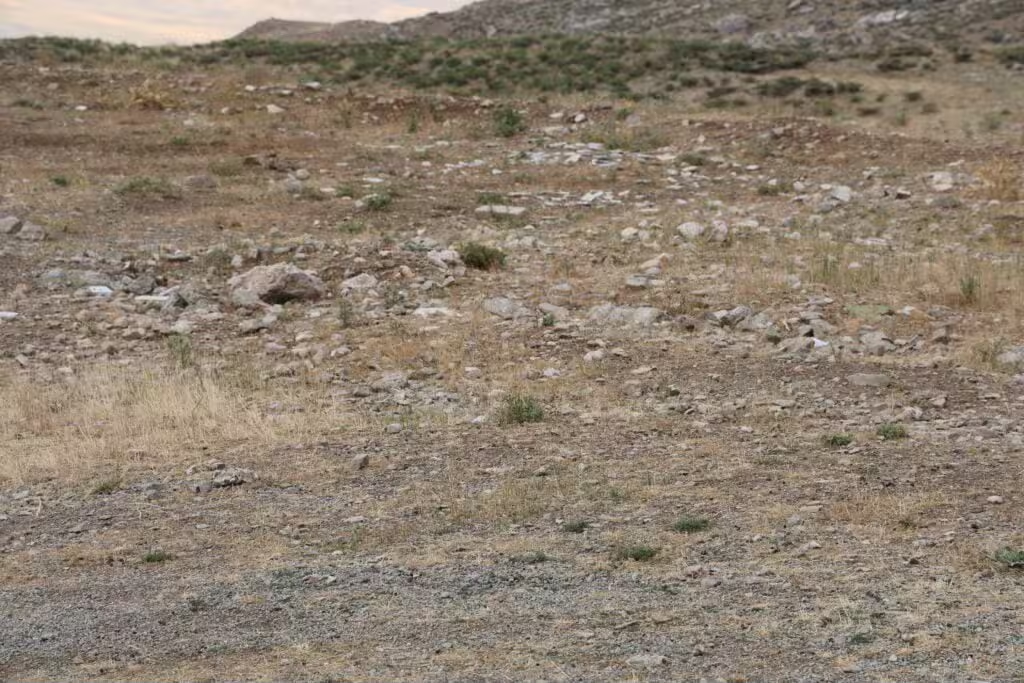
‘We couldn’t visit the cemetery due to restrictions’
Speaking to ANF, Mehmet Şah Nas stated that his cousin Mahfuz Nas (Edip) was martyred in Pervari in 1998 and that, like other families, they were not informed about their remains. Nas himself was involved in the work at the time. He stated that those who were martyred and buried in different places before the process was disrupted were reburied in cemeteries of martyrs when the process began.
“We knew my cousin had been martyred, but we didn’t know where he was,” said Nas. When he went to the martyrs’ cemetery after it was established, he saw his cousin’s name on the gravestone and found out only then that he had been buried there.
The family attended the cemetery’s opening and continued their visits afterwards, but after the process was disrupted, they were unable to access the area due to restrictions.
First bombed by warplanes, then flattened by bulldozers
“The cemetery was first bombed by warplanes, then flattened by bulldozers. They destroyed all the stones around it and the garden wall. After that, a flood hit. Ten years have passed and people who go there now say nothing remains. We haven’t been able to visit the cemetery for a long time, but with this peace process starting again, families can go back. We have also learned that a tower is being built near the cemetery,” Nas stated.
Calling for opportunities to be provided for people to visit the cemeteries of martyrs, Nas said, “All families should be able to do so. Mr. Abdullah Öcalan said in 1993: ‘If we forget the martyrs for even a minute, we are more traitorous than the traitors.’ Our martyrs are our honor.”
‘Peace and equality begin with respect for the dead’
“The current process has been shaped by the sacrifices made, the efforts exerted, and the blood shed so far. Cemeteries of martyrs are the honor of this people. These attacks actually targeted our honor. All cemeteries of martyrs must be rebuilt. Peace and equality begin with respect for the dead and for honor. Nowhere else in the world are cemeteries attacked, but here many graves were bombed, and bones were buried under the pavement. This violates both the law and human rights,” said Nas, adding that Kurds have been acknowledged by the whole world thanks to their martyrs.
Remarking that the new process depends on the freedom of the Kurdish people, Nas stressed that the value of peace and the process must be recognized.