
For some time, resistance has been forming in many parts of Kurdistan against energy, mining and infrastructure projects that are perceived by the population as a threat to nature, livelihoods and social structures. Varto is considered one of the central locations of this ecological resistance. The US-based company Ignis H2 Energy plans to build a geothermal plant in the region. At least 16 predominantly Kurdish-Alevi villages will be affected by the project.
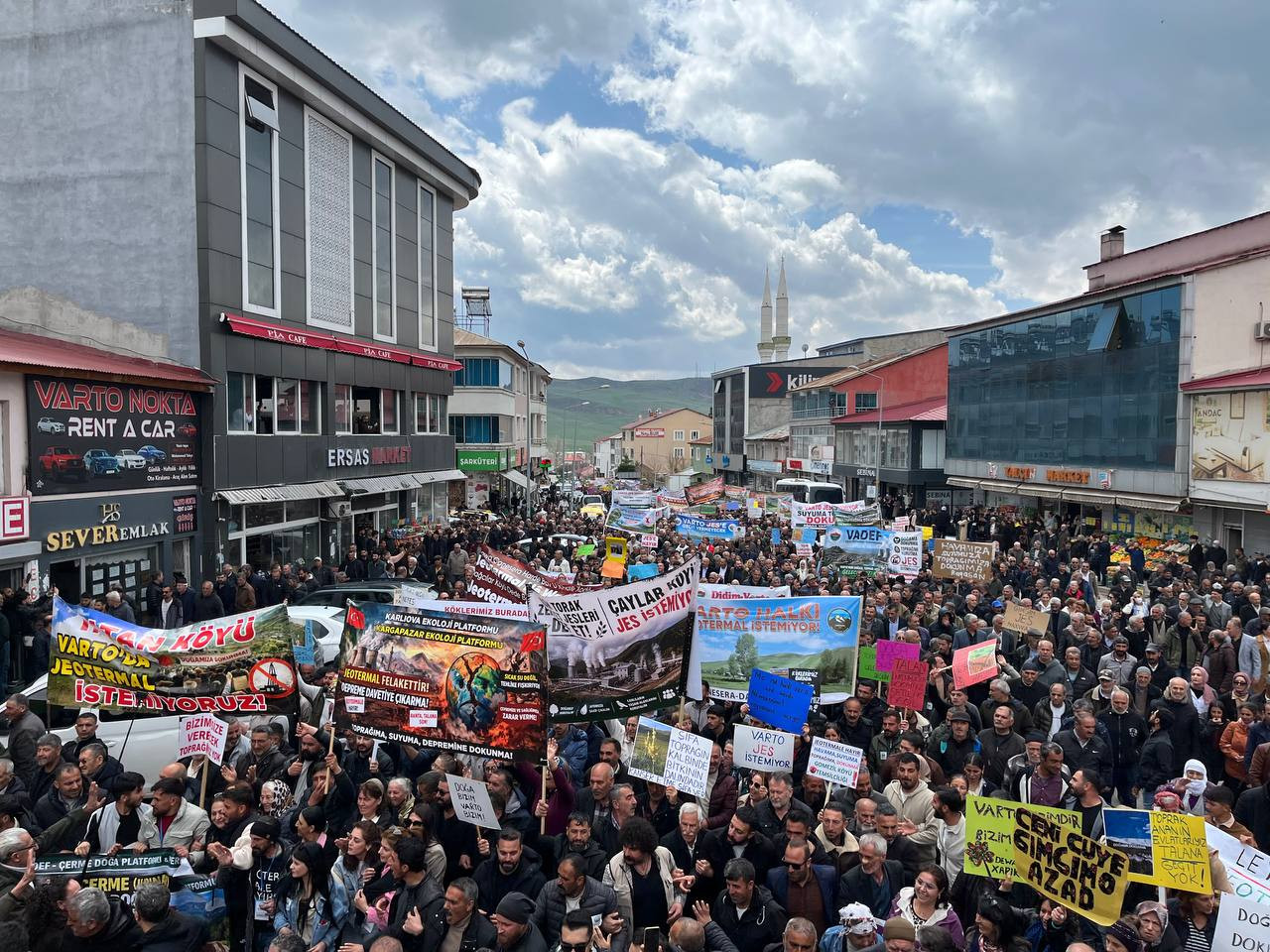
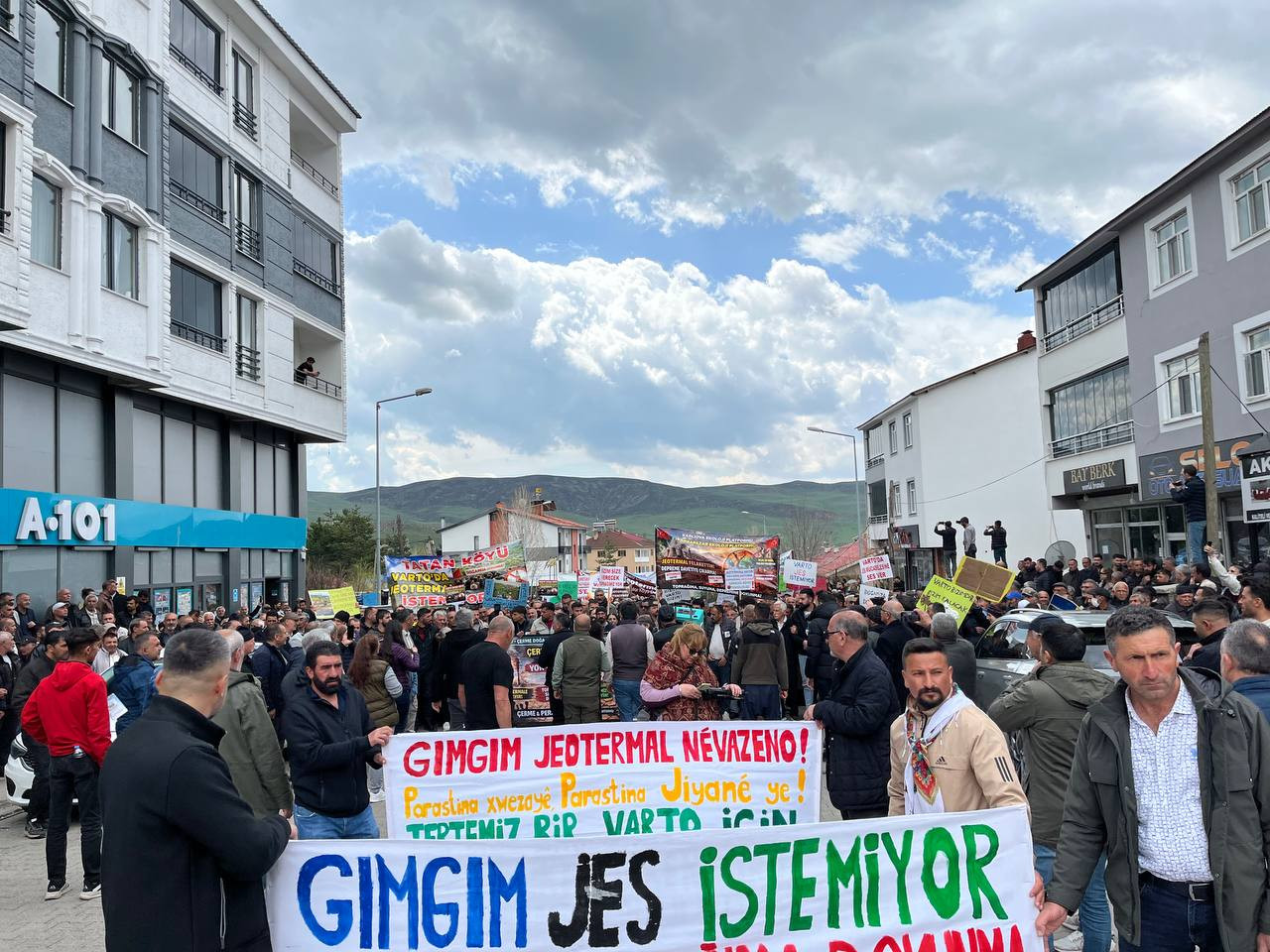
In the Varto district of Muş province, thousands of people demonstrated against a planned geothermal project and increasing ecological destruction. Under the slogan “We defend our nature, our water and our land,” activists, politicians and residents of the region gathered for a large rally.
Even before the rally, thousands marched to the city center, chanting slogans such as “Long live the resistance of Varto,” “We will win through resistance,” and “Jin, Jiyan, Azadî” (Woman, Life, Freedom). Among the participants were representatives and members of parliament from the parties DEM (Peoples’ Equality and Democracy Party), DBP (Democratic Regions Party), CHP (Republican People’s Party) and EMEP (Labour Party), activists from the TJA (Free Women’s Movement), as well as members of numerous civil society organizations.
Solidarity message from imprisoned Akbelen activist
At the rally, a letter of solidarity from imprisoned environmental activist Esra Işık was also read out. She is currently held in a prison in Izmir and became known through her resistance for the Akbelen Forest in the Mediterranean province of Muğla. In her letter, she emphasized the importance of joint struggles to protect nature and living spaces and called for the continuation of resistance despite repression.
The co-chair of the DBP, Çiğdem Kılıçgün Uçar, stated in her speech that geothermal projects in Muş and other regions of North Kurdistan aim at the expropriation of land and nature. She warned that international companies are attempting to appropriate resources in the region and stressed that the population will not give up their land. “They want us to lose our land, but we will not allow it,” said Uçar.
Kordu: Exploitation of nature is part of a broader system
EMEP MP Sevda Karaca also placed the resistance in Varto in a nationwide context and stressed that wherever companies seek access to resources, resistance emerges. Varto has become a symbol of this struggle, she added.
DEM Party MP Sırrı Sakık highlighted the importance of social unity, stating that collective resistance provides hope beyond the region. His fellow party member Sümeyye Boz expressed a similar view, describing the ecological struggle as a central component of a democratic and free social model.
Several speakers also drew connections between ecological destruction, state policies and social oppression. DEM Party MP Ayten Kordu stated: “The exploitation of nature is part of a broader system that also targets women and social diversity.”
MP Kezban Konukçu, also from the DEM Party, criticized the government’s cooperation with international companies and accused it of handing over the region’s resources to economic interests.
Tuncel: Resistance is also directed against political and cultural oppression
TJA activist Sebahat Tuncel emphasized the link between ecological struggles and social self-determination. “The resistance is directed not only against environmental destruction, but also against political and cultural oppression,” she said, noting that the goal is to build a free, democratic and ecological life.
Leave a Reply