
The Kurd-î Zan Ararat Language and Culture Association, which recently announced its establishment in Ağrı province, has begun its activities. Kurdish is being taught to 80 students in two classrooms, while music lessons are given to 25 students in one classroom.
Co-chair Dicle Bozkurt recalled that the pressure on the Kurdish language has a century-long history, saying: “The issue of language is a unique matter with a deep-rooted history spanning a century. In fact, the processes we are witnessing today are also part of this struggle for language. Especially after the 1980 military coup, pressure on the mother tongue increased and special laws were enacted to completely suppress the people’s language. During that period, mothers were not allowed to speak Kurdish with their children in Diyarbakır Prison, and those who tried to break this ban were beaten and removed. These pressures spread to schools and the streets as well. Children who spoke Kurdish during lessons or recess were subjected to violence by teachers and were punished by being thrown outside in the winter cold. Although this climate of fear, which spread from shops to homes, partially changed with the easing of laws in 1991, the pressure did not end. Today, although the step of elective courses has been taken, we want to go beyond these limits and ensure that Kurdish attains an official status where it is spoken everywhere.”
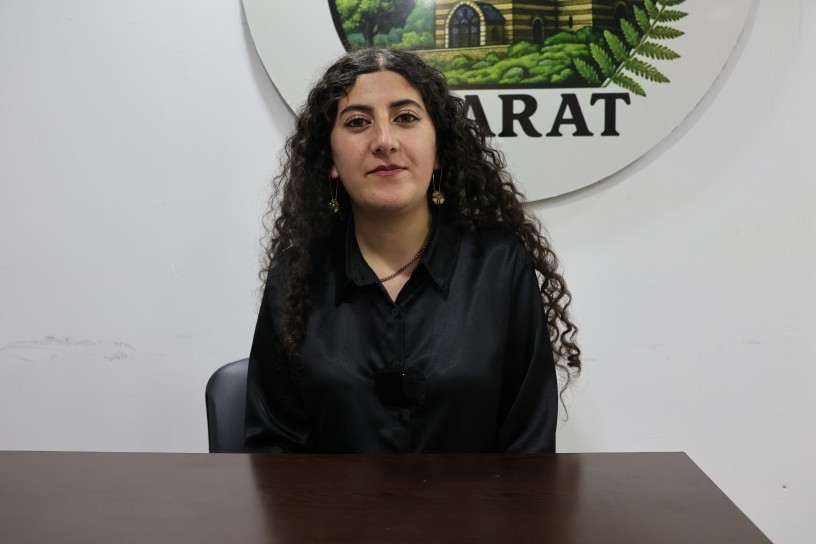
The association’s activities
Dicle Bozkurt noted that they applied in 2025 to address the lack of a language institution in Ağrı and the Serhat region, saying: “This gap did not exist only in Ağrı. Across the entire Serhat region, we felt this absence, so we established the Kurd-î Zan Ararat Language and Culture Association. Within our association, we provide both Kurdish language classes and cultural courses; our relations with the public and other institutions are quite strong. Currently, we have 80 students in two classrooms where we provide language courses. In addition, in our cultural class, we offer erbane and bağlama lessons to 25 students.”
Dicle Bozkurt stated that they have started language and cultural activities in the districts of Ağrı as well: “We have 50 students in Diyadin, and within a few days we will begin our courses in Doğubayazıt with the registration of 80 students. We have not forgotten our children either; we opened a language class for children aged 10–13. Life is meaningful with Kurdish. Language is the body, and we should defend it. Our demand is for Kurdish to be spoken and lived everywhere—in associations, schools, homes, and streets. Speak Kurdish, think in Kurdish, live in Kurdish.”
The elective course debate
Diyar Demir, the other co-chair of the association, stated that the visibility of Kurdish in the public sphere is still limited by political choices: “Although obstacles to the Kurdish language have decreased, indirect barriers are still maintained. The state’s elective course step exists on paper, but in practice there are no teacher appointments. Even if students choose the course, classes are generally left empty. This situation is a political choice that makes it difficult to exercise the right to mother tongue and to transmit the language. Our demand is not elective courses, but for Kurdish to become an official language of education.”
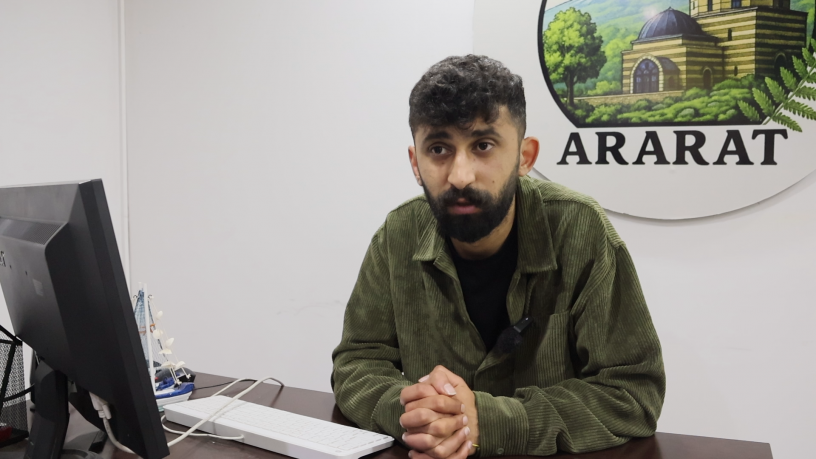
‘Let us live in Kurdish’
Demir emphasized that the Kurdish language still faces obstacles in the public sphere: “Although our youth are conscious about learning their language and culture in the digital sphere, they still face serious risks and barriers when receiving services in the public sphere. As Kurd-î Zan Ararat, we provide language classes two days a week and culture and arts classes one day a week. We receive very positive feedback from the public, especially from young people and women. This interest encourages us to be more active. Our only wish is for Kurdish to be spoken and kept alive everywhere society exists; because unless the mother tongue is secured constitutionally, the danger of assimilation will always remain. Let us speak Kurdish, think in Kurdish, and live in Kurdish.”
Leave a Reply