
Following the attacks on the Kurdish neighborhoods of Ashrafiyah and Sheikh Maqsoud in Aleppo starting on January 6, indications of serious crimes against the civilian population have been increasing. While the fate of thousands of abducted Kurds remains unknown, local sources report a mass grave containing more than 270 bodies in the eastern part of the city. Independent investigations have not yet been conducted.
The offensive by the Turkey-backed Syrian transitional government, which quickly expanded from Aleppo to other parts of northern and eastern Syria, marks a turning point for Rojava. The attacks specifically targeted the Kurdish population and their achievements. Tens of thousands of people were displaced, hundreds are reported to have been killed, and many others have been missing ever since.
Unclear figures, conflicting reports
It is still not possible to determine exactly how many people have disappeared since the beginning of the attacks. Different sources provide significantly varying figures, further complicating efforts to clarify the situation. The commander-in-chief of the Syrian Democratic Forces (SDF), Mazloum Abdi, had previously stated that 1,070 people, including civilians, were being held by forces of the Syrian transitional government. As part of an agreement between the SDF and Damascus, around 300 prisoners were released on March 19. However, even this figure offers only limited clarity. Local sources indicate that many of those released were individuals who had already been detained before the attacks of January 6. As a result, the situation of those abducted during the offensive remains unclear.
“We don’t know where they are”
Nesrîn Silêman from the Association of Displaced Persons from Afrin describes a much larger scale of disappearances. She speaks of around 3,000 people whose whereabouts remain unknown. This figure also appeared in a report by Franziska Stier, member of the Grand Council of Basel-Stadt and Secretary General of the BastA! Party, who was part of a delegation that traveled to Rojava in early February. In an article titled “Our voices here reach no one – you must carry them to the world,” she brought the situation on the ground to international attention.
Silêman herself summarized the situation plainly in an interview with the Yeni Özgür Politika newspaper: “We do not know where these people are or what has happened to them.” There is no reliable information on whether the missing are still alive, where they are being held, or whether they have been killed.
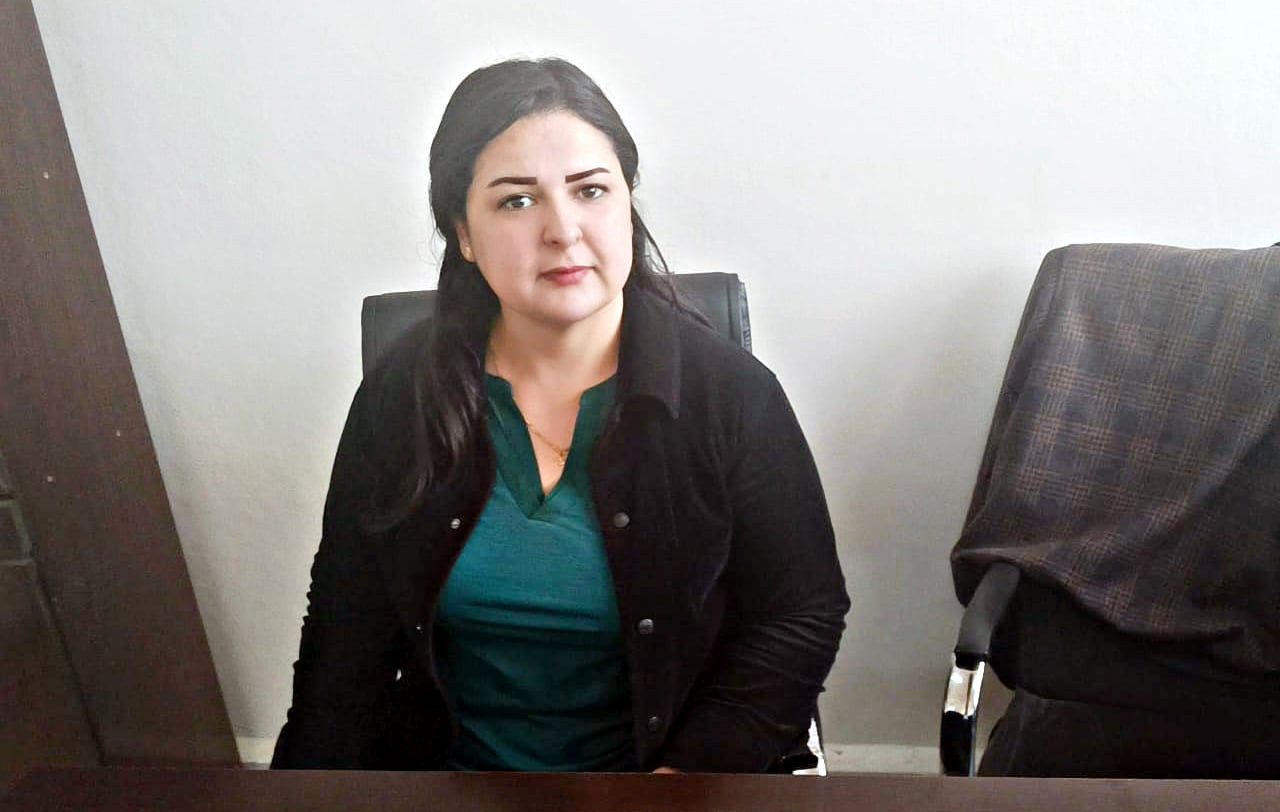 Nesrîn Silêman
Escape under fire and without contact with the outside world
According to testimonies, the attacks on Ashrafiyah and Sheikh Maqsoud took place under conditions that made an orderly escape nearly impossible. Communication channels were deliberately cut, Silêman reported. Telephone and internet connections either failed or were shut down. Many people had to leave their homes abruptly—often at night and without safe escape routes.
“The attacks lasted eight days and were very extensive,” Silêman said. During this time, many families tried to leave the neighborhoods, often heading toward Afrin or other areas. However, for many, the escape routes themselves turned into traps.
Abductions along escape routes
According to Nesrîn Silêman, many fleeing civilians were deliberately intercepted on the roads. Armed militias set up checkpoints or ambushes along the routes. “Many of our people were captured on the way, taken away, or directly abducted,” she said.
Families attempting to leave the contested neighborhoods were particularly affected. Others were detained in the places where they had sought refuge. Even those who initially managed to reach more distant regions such as Tabqa or Raqqa were apparently not safe. “Even there, many had to flee again later,” Silêman noted. The frontlines and zones of control of various armed actors shifted multiple times within a short period.
Fragmented control and lack of access
The situation is particularly unclear in regions such as Raqqa and Deir ez-Zor. These areas previously belonged to the Autonomous Administration of North and East Syria, but are now considered zones where various militias compete for influence. Silêman describes the situation as nearly uncontrollable: although the transitional government claims authority over these areas, they have effectively become zones where different actors operate in parallel.
This has far-reaching consequences for investigating abductions, killings, or enforced disappearances. “We have no way of gathering reliable information there,” Silêman said. Access is severely restricted for security reasons or not possible at all.
Thousands of cases, but hardly documented
Against this backdrop, the true scale of the violence remains difficult to assess. While some cases are documented—such as through testimonies from those affected or registered detainees—many others lack any verified information.
Silêman emphasizes that especially during the intense phase of the attacks between January 6 and 29, numerous incidents could not be recorded. People disappeared while fleeing, without their names being registered or their cases documented. “If we also include earlier abductions, we are talking about thousands of people whose fate we do not know,” she said.
Prisoner exchange with major gaps
Although talks on prisoner exchanges are ongoing between the conflicting parties, the picture here is also fragmented. According to Silêman, these processes are slow and selective. It is particularly striking that the release of women is handled only hesitantly. “The release of women is being delayed or not addressed at all. Women are significantly underrepresented among those released so far,” she said.
Moreover, the known exchange processes only apply to cases where detainees are registered or identified. For the large number of missing persons whose fate remains completely unknown, these mechanisms do not apply.
Open questions without answers
A central issue therefore remains largely unresolved: what happened to those who are neither listed among detainees nor identified as dead? “We do not know where they were abducted, whether they are still alive, or whether they have been killed,” Silêman said.
There are many unanswered questions that remain unresolved. In her view, this issue cannot be addressed within the framework of existing prisoner exchange processes. Instead, an independent investigation into the cases of the missing is required.
Kidnappings as a business model
In addition to politically motivated violence, numerous reports point to a systematic economic dimension behind the abductions. According to Nesrîn Silêman, relatives of those abducted were repeatedly contacted by phone and put under pressure. Militias reportedly threatened families with the death of their relatives and demanded ransom payments. “Our people are being turned into a tool of extortion,” Silêman said.
In some cases, there were even attempts to make the release of bodies conditional on payment. This practice suggests that parts of the violence have taken on an autonomous dynamic and serve not only political purposes but also function as a source of income.
Reports of executions and extreme violence
Alongside the abductions, there are indications of targeted killings. Eyewitnesses have reported that some detainees were executed immediately after being captured. Some of these accounts go even further, mentioning cases in which victims were allegedly burned after being killed.
These claims have not yet been independently verified, but are described in similar terms by various local sources. For those affected and their families, this creates a situation of complete uncertainty—caught between hope for survival and the fear that the missing have already been killed.
Indications of a mass grave in Naqqarin
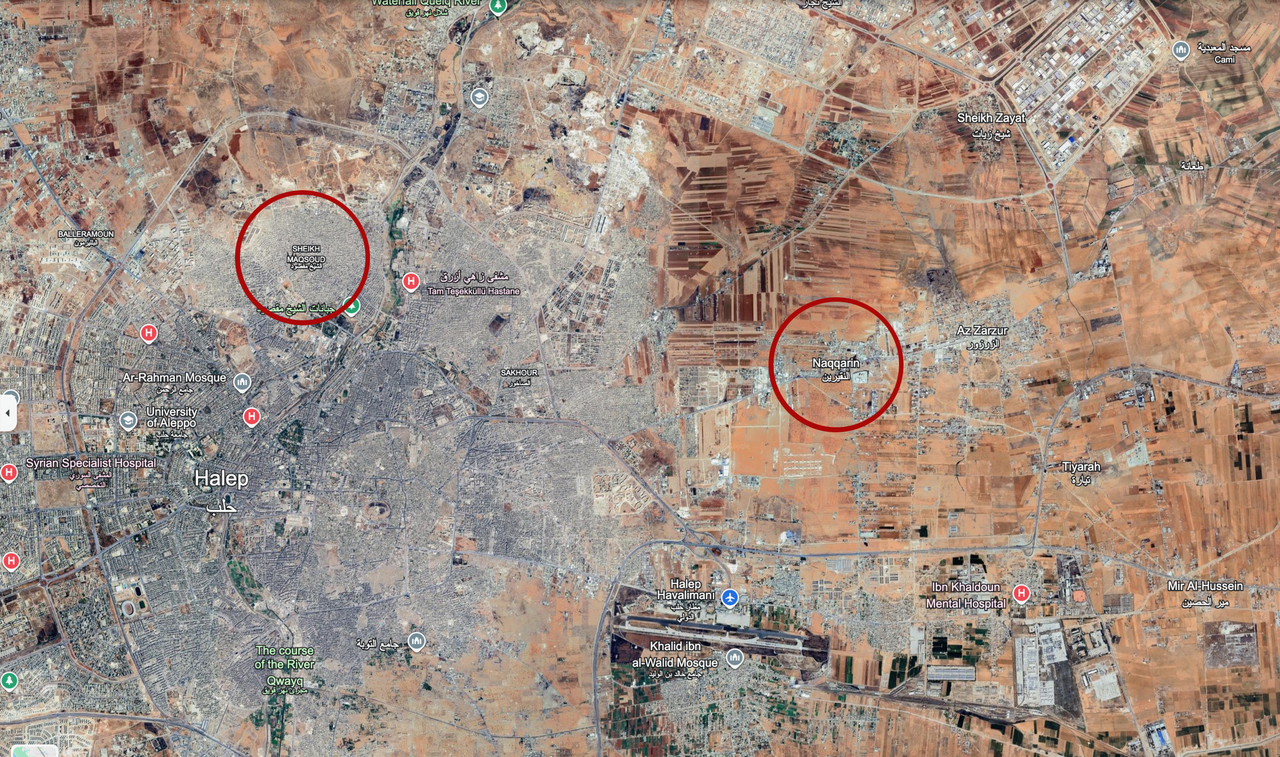
Particularly serious are the reports of a possible mass grave in the Naqqarin (also Nakarin) area, east of Aleppo along the M4 highway toward al-Bab. According to Nesrîn Silêman, based on witness testimonies, more than 270 bodies are believed to be located in a canal there.
The information reportedly comes, among others, from a family from Afrin who came across the site while searching for a relative. Eyewitnesses stated that detainees were brought together in the area and then killed. Some of the bodies are said to show visible signs of severe violence.
No access, no independent verification
An independent investigation of the alleged mass grave has not yet been possible. The area is still considered unsafe and is hardly accessible to independent observers. “We have no possibility to go there ourselves and verify the information,” Silêman said.
The claims are therefore based entirely on witness testimonies and indirect reports. At the same time, several factors suggest that the information is plausible. The location of the area—around ten kilometers from Ashrafiyah—corresponds to the escape routes of many civilians from the Kurdish neighborhoods of Aleppo.
Indications are increasing
According to local sources, the dead may be people who were abducted during the attacks on Ashrafiyah and Sheikh Maqsoud or killed shortly afterward. At the same time, it is assumed that the reported figure of more than 270 bodies does not reflect the full scale.
Many consider it possible that additional burial sites exist or that the actual number of victims is higher. However, as long as no independent investigation is carried out, these claims remain preliminary and the exact scale of the events remains unclear.
Call for an international investigation
In light of the large number of unresolved cases, Kurdish organizations are calling for an independent international investigation. Nesrîn Silêman advocates for the deployment of a commission involving, among others, the United Nations and the European Union. Such an investigation is deemed necessary to clarify the fate of the missing and to document possible crimes.
Due to the security situation and the fragmented control over many areas, local structures are currently unable to carry out this task. “If such an independent commission is established, we are ready to support it with all the means at our disposal,” Silêman said.
European Union between expectations and reality
The demands are also directed at the European Union, which has intensified its engagement with the transitional government in Damascus despite reports of violence and human rights violations. Following a visit by high-ranking EU representatives to Syria, financial support amounting to 620 million euros was announced. The funds are intended, among other things, for humanitarian aid and reconstruction.
However, this support stands in tension with developments on the ground. In a resolution, the European Parliament pointed out that the violence against civilians may constitute war crimes and that the rights of the Kurdish population must be guaranteed. At the same time, the transitional administration in Damascus has been criticized in political statements for failing to adequately fulfill its responsibility to protect the population.
Two questions to the EU
Against this backdrop, Yeni Özgür Politika has submitted two key questions to the European External Action Service: first, whether the EU, in light of its financial support, is requesting concrete information from the transitional administration regarding the fate of the missing; and second, whether it is prepared to commission an independent investigation into reports of murders, expulsions, rapes, and disappearances carried out by the Syrian transitional government under Ahmed al-Sharaa before they support this government with EU taxpayers’ money.
EU: Implementation of the agreement is essential
In a written statement, an EU spokesperson said that the situation in North-East Syria is being closely monitored and that all parties involved have repeatedly been called upon to lay down their weapons, protect civilians and civilian infrastructure, and facilitate the delivery of humanitarian aid.
At the same time, the EU representative emphasized the central importance of the agreement between Damascus and the SDF: “Now more than ever, it is essential that the Syrian transitional authorities and the Syrian Democratic Forces fully implement the agreement reached on the 29th of January, in a spirit of good faith and compromise.
At the same time, the EU representative emphasized that the full respect and protection of the rights of Kurdish people is key to the success of such efforts: “The EU consistently reiterates this in its diplomatic contacts with the Syrian transitional authorities and all other interlocutors.”
The representative stated: “The EU continues to closely monitor all developments on the ground and remains vigilant about the respect for human rights and international humanitarian law. In June 2025, the EU imposed restrictive measures under the European Union Global Human Rights Sanctions regime on five persons responsible for serious human rights violations and abuses in Syria, including involvement in the violence in the coastal region of Syria in March 2025. It is crucial that all perpetrators of violence, regardless of their affiliation, are held accountable in line with international justice and norms. The EU recalls that the transitional authorities bear the responsibility to protect all Syrians without discrimination. The EU will support all endeavours to that end.”
Between diplomatic statements and unresolved crimes
Despite these statements, a gap remains between diplomatic rhetoric and reports from the region. While political discourse speaks of stabilization and transition processes, local sources depict ongoing violence, insecurity, and a lack of accountability. Reports of a possible mass grave, systematic abductions, and thousands of missing persons raise questions that remain unanswered.
An unresolved balance
Several months after the January attacks, the fate of many people remains unresolved. For their relatives, this means an ongoing state between hope and uncertainty, without access to reliable information. Without independent investigations, little is likely to change. The central question remains: what has happened to those who have been missing since the beginning of the attacks?
Leave a Reply