
The 2026 Women Tribunal begins today in the Belgian capital, Brussels. The multi-day event builds on 50 years of international tribunals addressing crimes against women and positions itself as a feminist platform against structural violence and state impunity. The tribunal is organized by a broad network of civil society organizations, including the Kurdish Women’s Movement in Europe (TJK-E) and the Jineolojî Committee. It opens at the Université Libre de Bruxelles and will continue in Antwerp until Saturday.
Panels at the opening
Under the title “Reclaiming (Feminist) Justice,” several panels at the opening focus on strategies against violence toward women as well as feminist approaches to justice. Another key theme is the political dimension of justice: under the title “Symbolic Justice and Political Resistance,” discussions will address how feminist movements respond to systematic violence and develop their own forms of justice.
An alternative to state institutions
The tribunal explicitly does not see itself as merely symbolic, but rather as an alternative to state institutions that often fail to prosecute violence against women or are themselves part of these structures of violence. At its core are testimonies from survivors, collective analyses, and political demands. After the opening in Brussels, the tribunal will move to Antwerp. There, the program begins on Thursday with a staged music and theater performance by the 2026 Women Collective, directed by Alix Konadu, involving 40 women from various European cities.
“Unmasking the mythology of patriarchy”
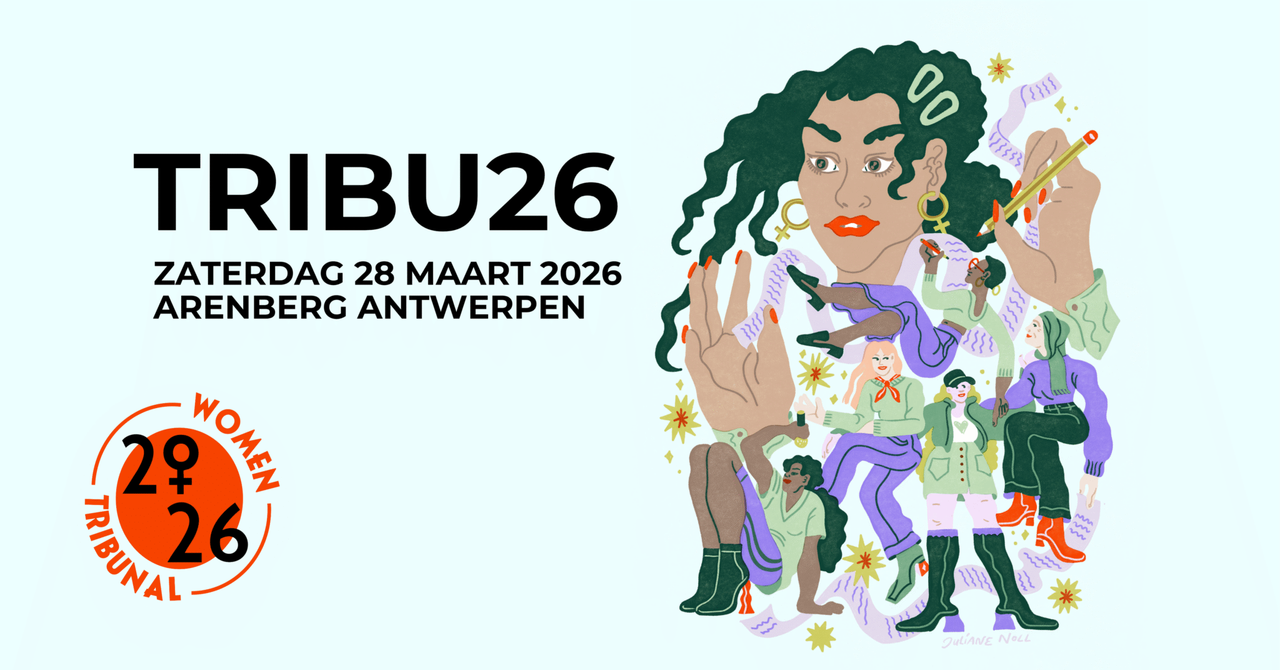
On Friday, an extensive program of workshops, artistic contributions, film screenings, and discussion panels will take place at the Arenberg Theater. Kurdish women will also actively participate in the program. TJK-E and the Jineolojî Committee are organizing, among other things, a workshop titled “Unmasking the mythology of patriarchy” and will present their work. The final day on Saturday will focus on collective testimonies. Around 500 women are expected to gather at 50 tables to share their experiences of violence and jointly develop perspectives for resistance and change. An evening cultural program is planned, which will also address the women’s revolution in Rojava.
Call for participation by Kurdish women
The tribunal is supported by eight organizations, including the 2026women initiative, Madam Fortuna, and the Arenberg Theater, and is backed by numerous other initiatives. Among the participating actors, alongside the Kurdish women’s movement, are the DACH network against femicide, active in Germany, Austria, and Switzerland, and the Mexican collective Colectiva Hilos. TJK-E has especially called on Kurdish women living in Belgium to actively participate in the tribunal and contribute their experiences, perspectives, and struggles.
Photo: “Silhouettes” © Anna Kestens & Kim Karnas