
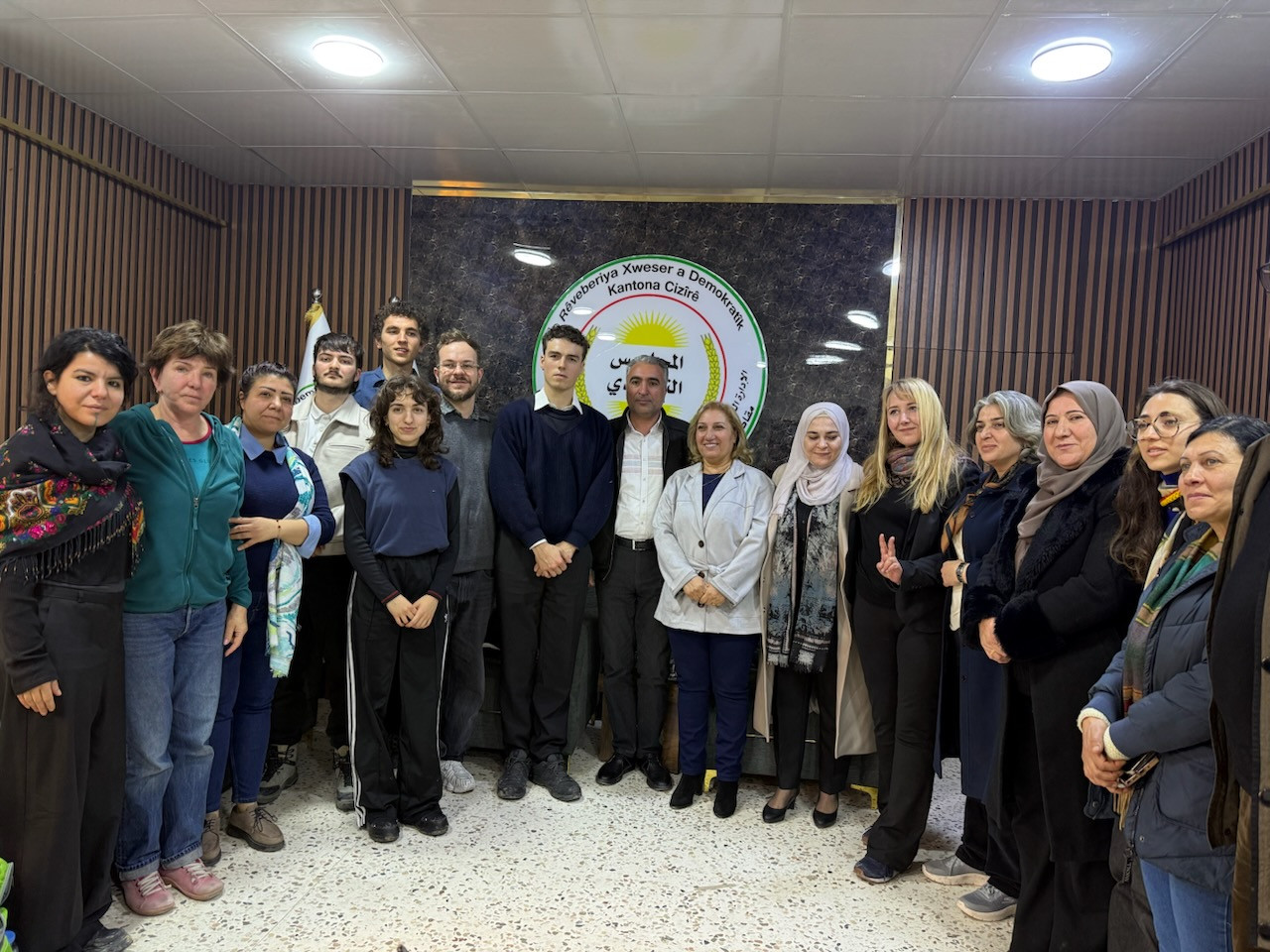
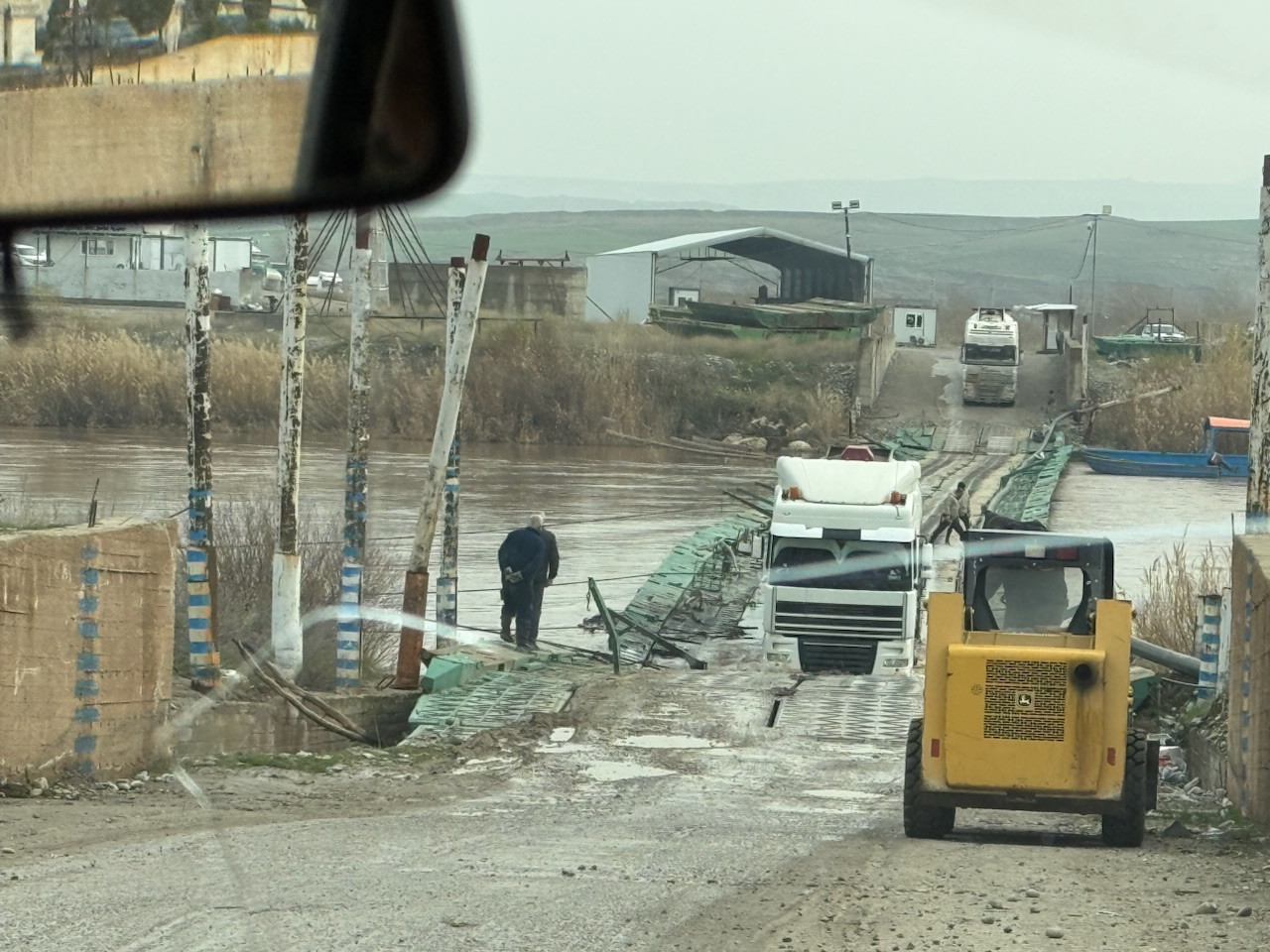
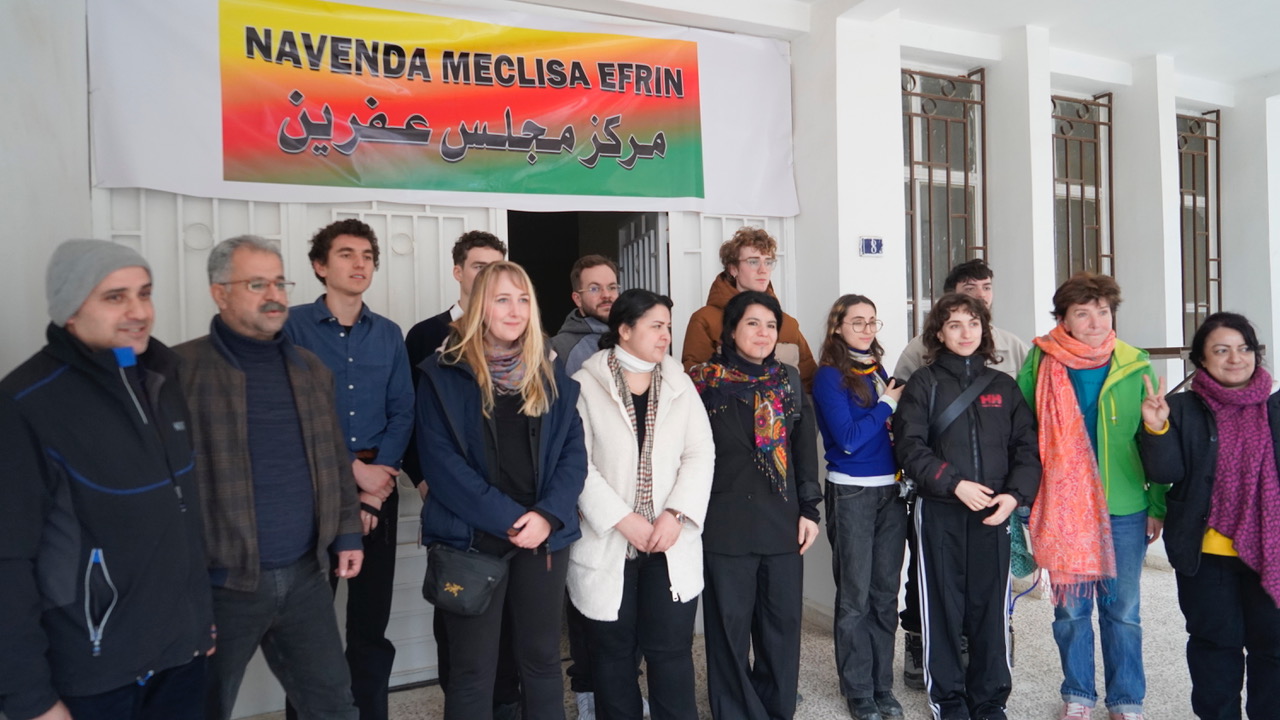
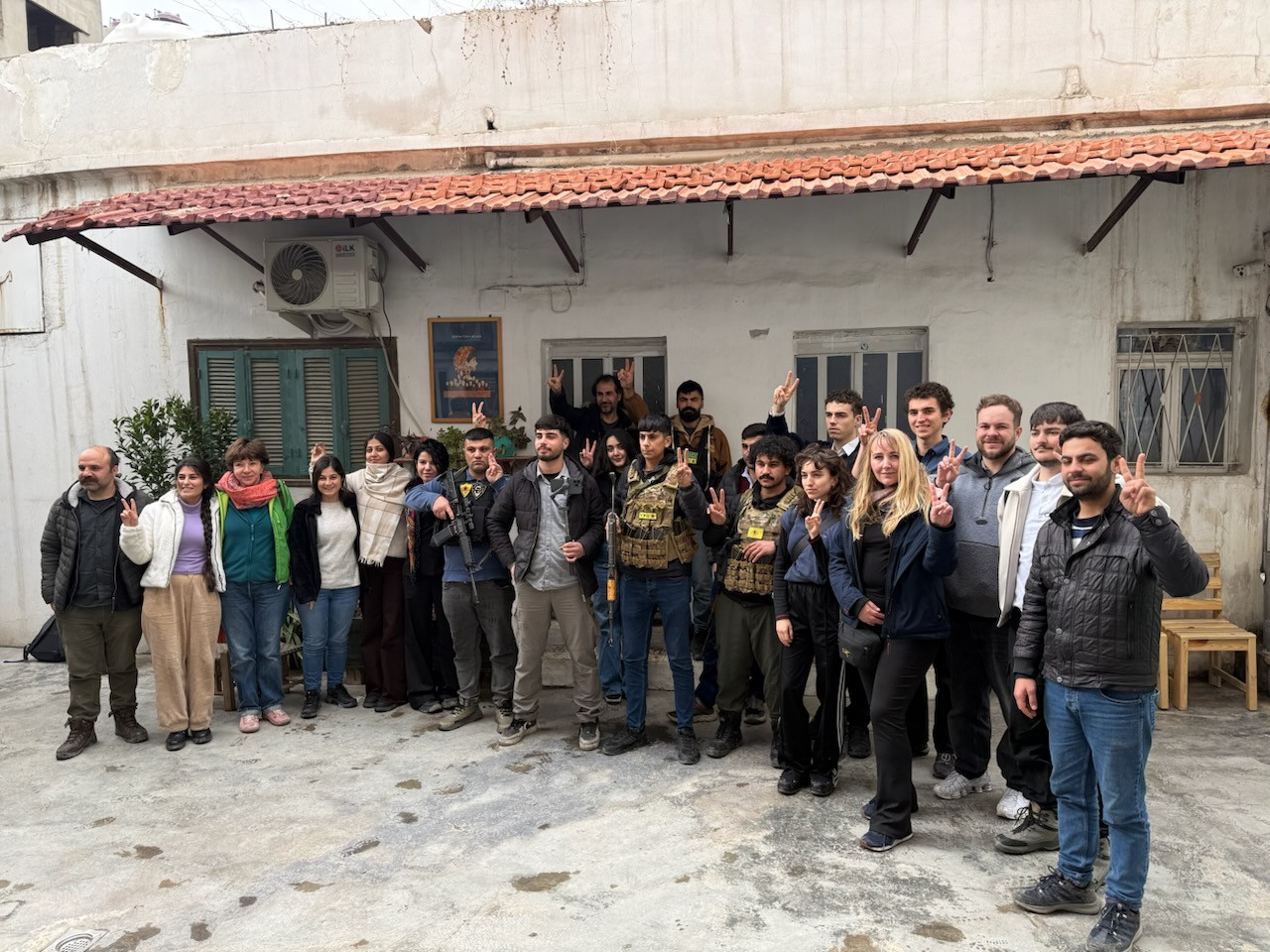
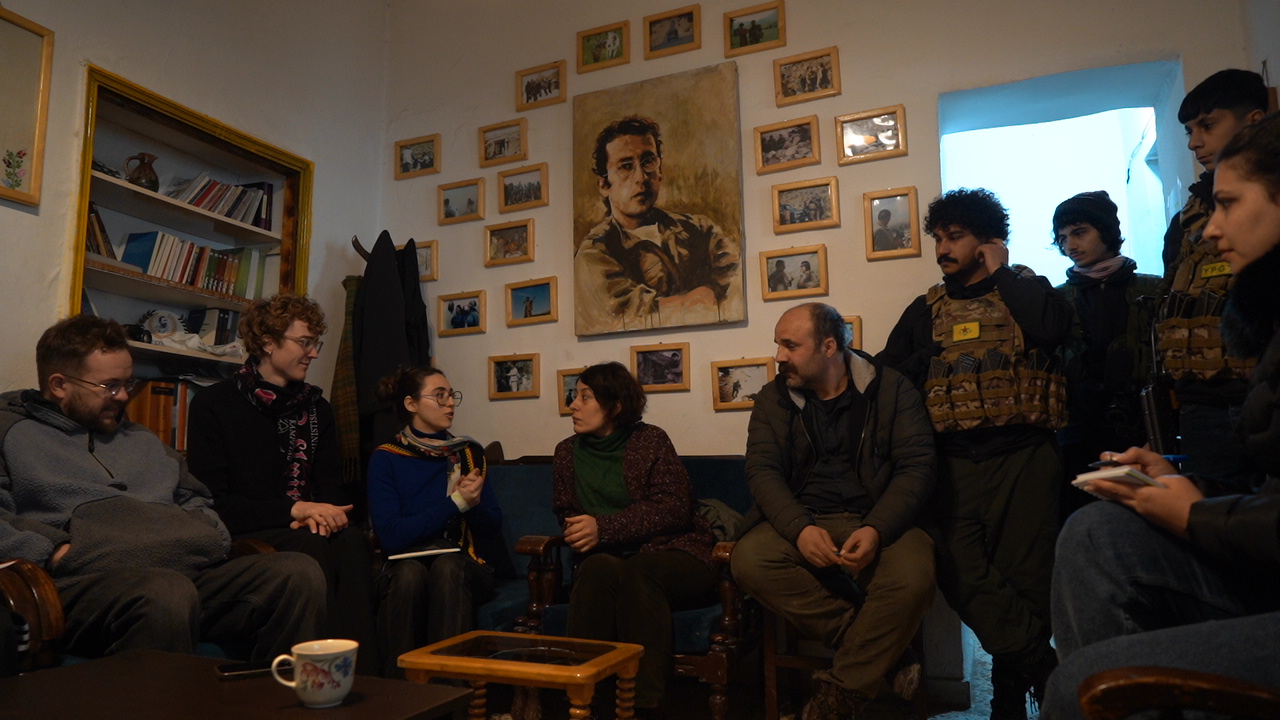
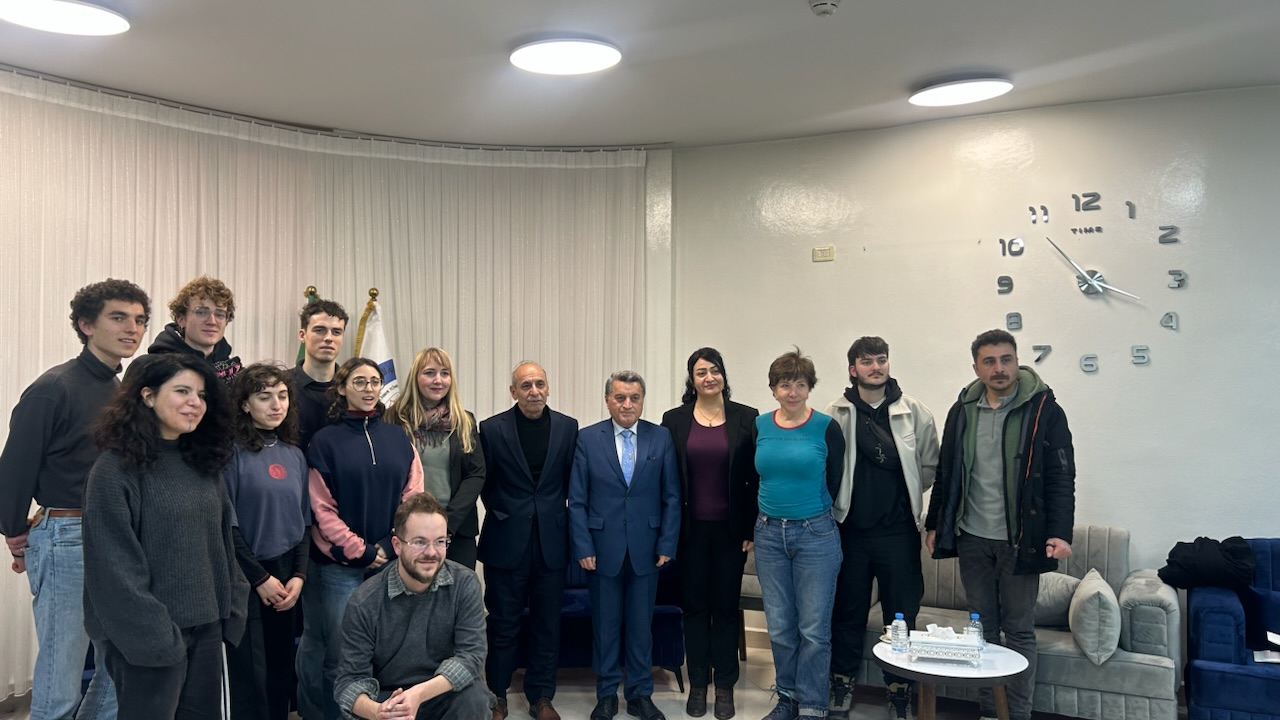
From 1 to 3 February 2026, the Delegation for Humanity was in Rojava, in Qamishlo and in the Canton of Cizîrê. It was the first international delegation since 6 January.
We arrived in a region under a state of emergency. And in a society that, despite a formal ceasefire, has not found calm.
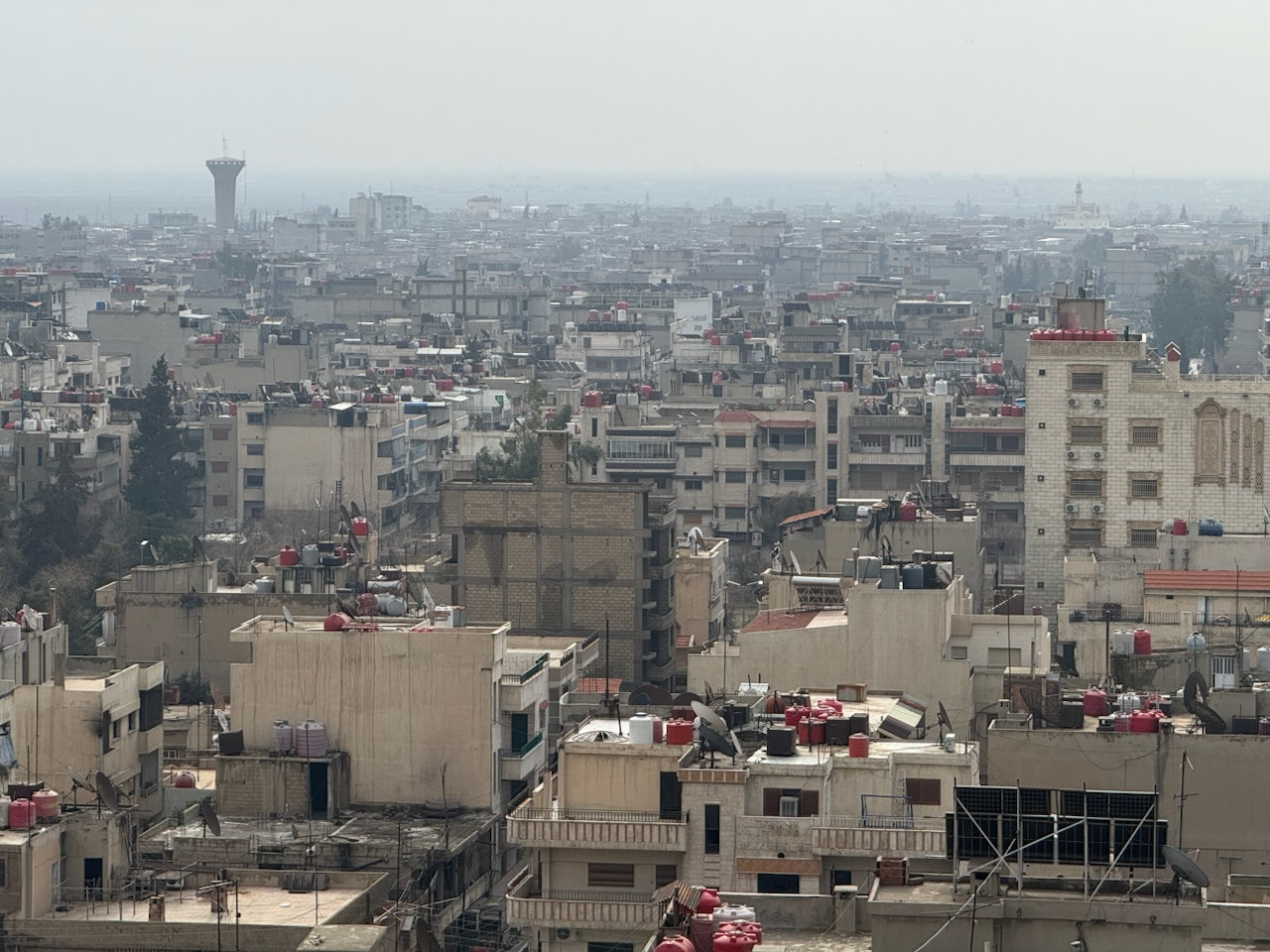
A ceasefire without trust
On Friday, 30 January, the SDF and the Syrian transitional government under al-Sharaa agreed to an immediate ceasefire. The agreement with the Syrian transitional government, which provides for the integration of the political and military structures of North and East Syria into the Syrian central state, was signed to prevent further bloodshed. “We did not want this agreement,” a representative of the autonomous administration in Cizîrê told us. “But we had to accept it for our people so that the bloodshed would end.”
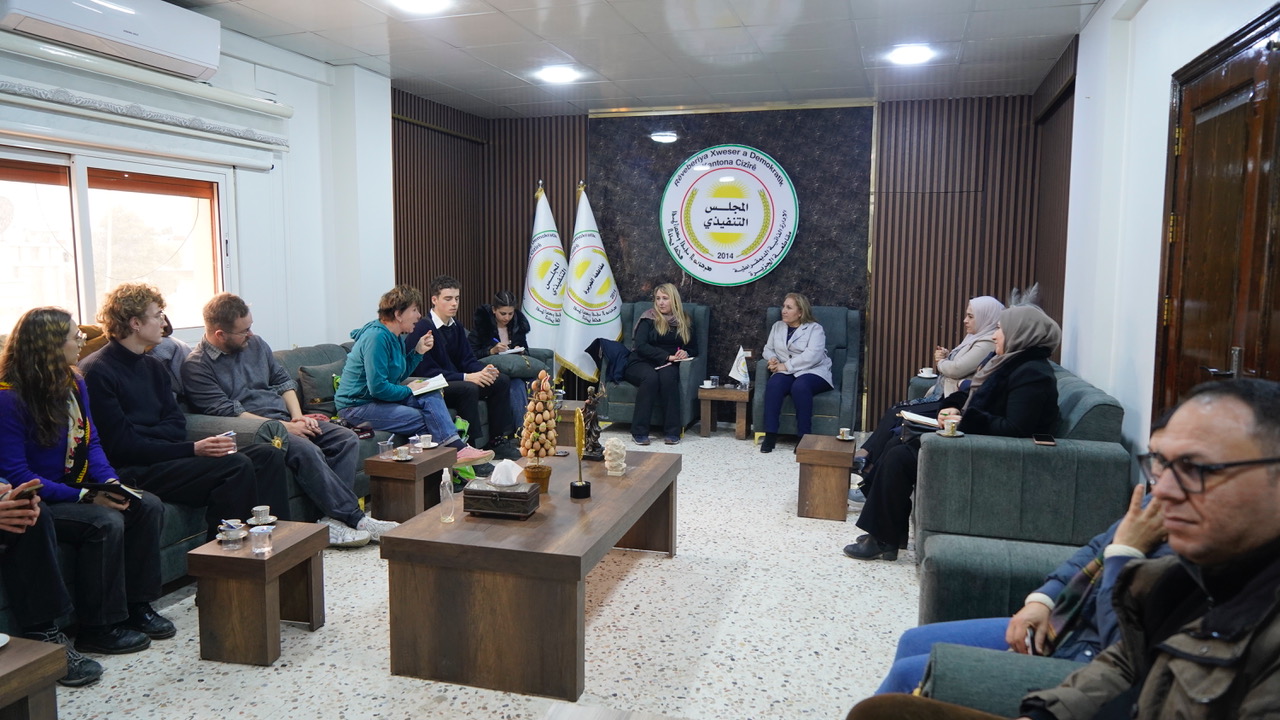
However, there is no trust in the transitional government. Neither the political leadership nor the population feels any sense of security. Too often agreements have been broken, and too often the international community has been willing to strike compromises at the expense of the people here.
“Our future is linked to Syria and the Middle East,” the representative of the Canton of Cizîrê explained to us. “We hope for peace. But we are ready to defend our freedom.” All the more urgent, therefore, are international security guarantees. Without them, this ceasefire remains a house of cards in the storm.
General mobilization – when a society assumes responsibility
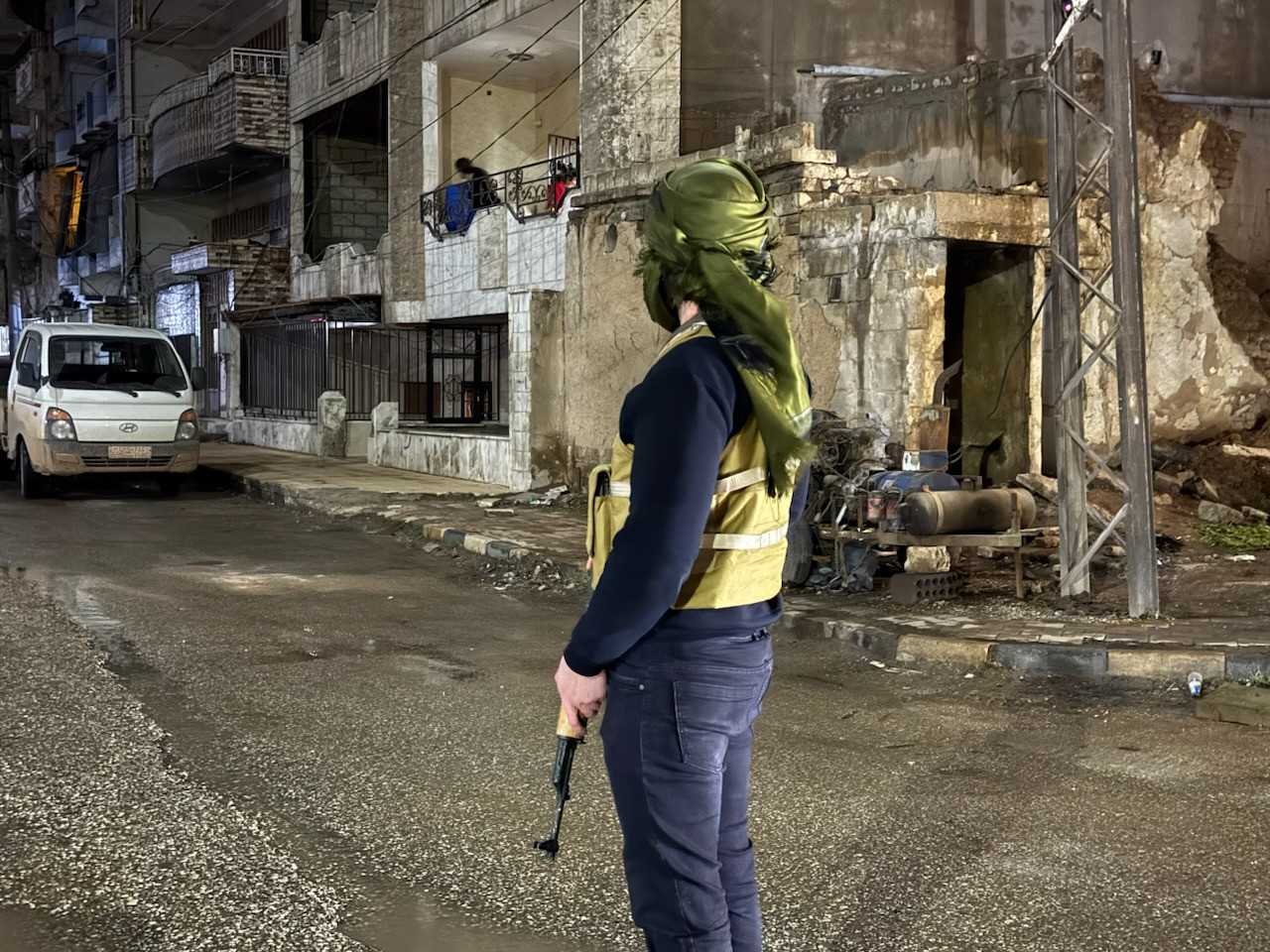
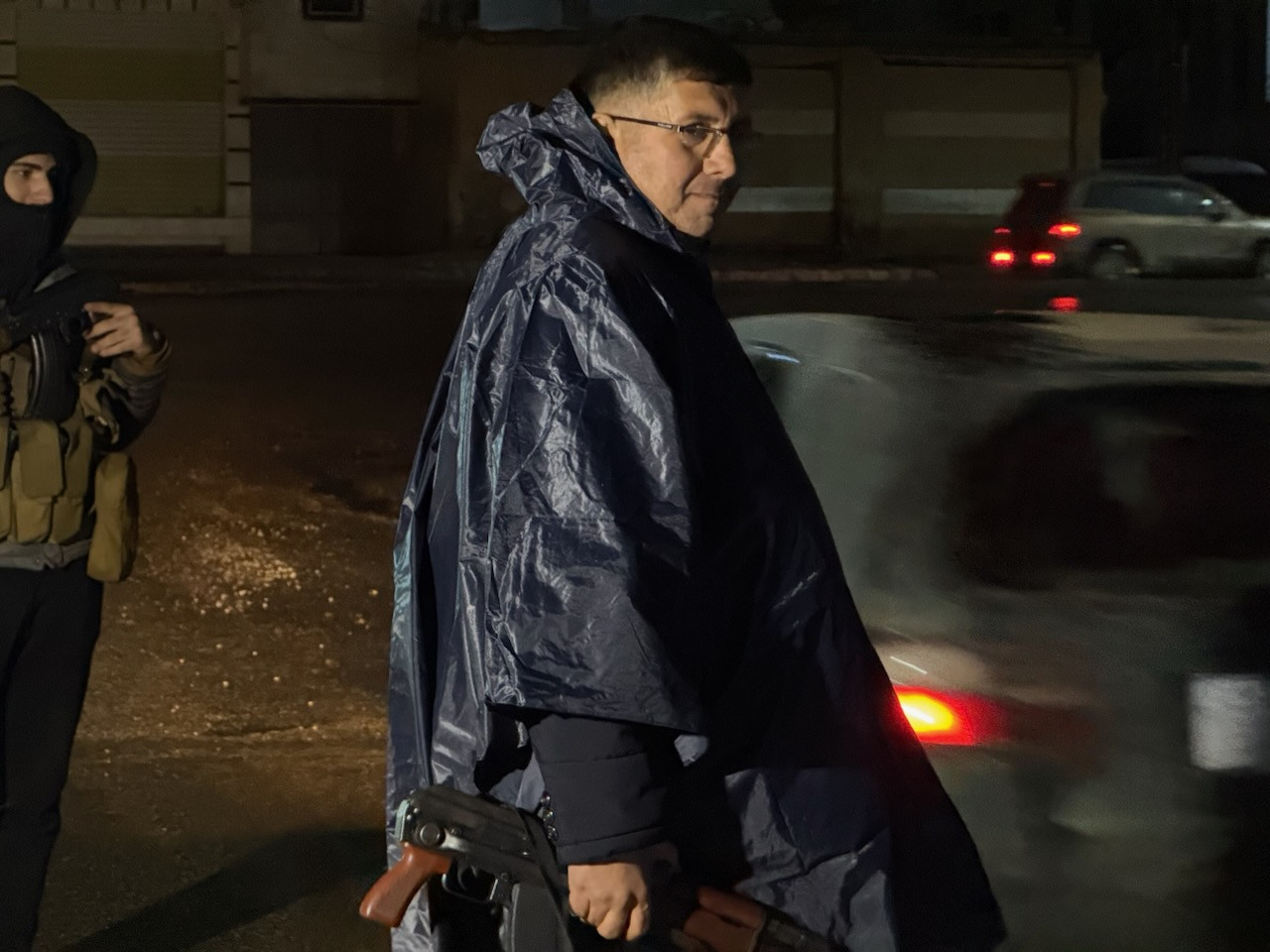
Rojava has declared a general mobilization. That sounds military, but it means much more. It means that people from nearly every household contribute according to their abilities. Civilians secure their neighborhoods at night. In Qamishlo, ten volunteers stand guard at each checkpoint within the city every night. Seventeen emergency commissions coordinate protection, supplies, and support for tens of thousands of displaced people.
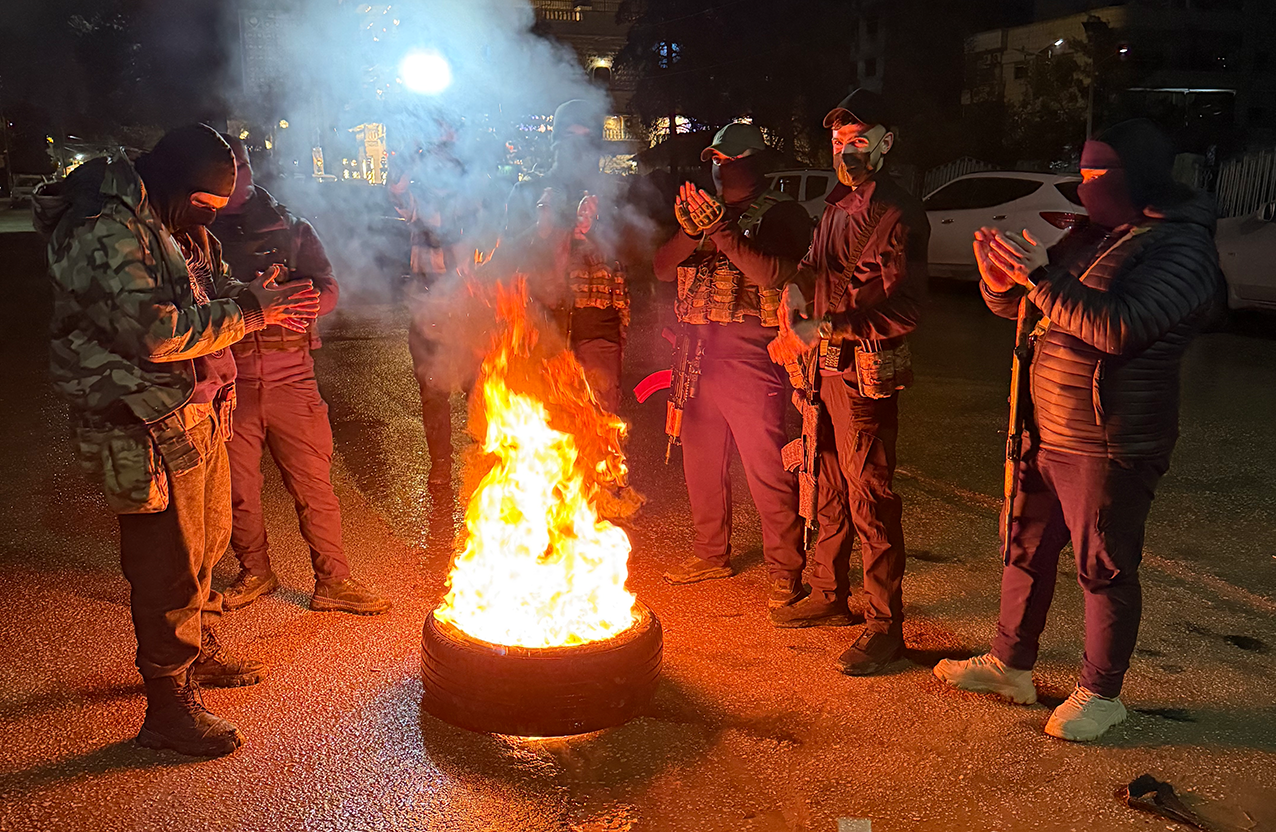
“All people are defending their cities and Rojava,” Rojhat Afrin, head of the Semalka border crossing, told us. Representatives of Kongra Star, the umbrella organization of women’s groups in Rojava, put it even more clearly: “In the face of a looming genocide, we must direct all our energy toward self-defense.” This energy and determination are tangible not only in the official meetings our delegation held with administrative and civil society structures, but also in the streets.
170,000 displaced people – and no guarantees
Around 170,000 internally displaced persons are currently living in Qamishlo. They are families from Afrin, Raqqa, and Tabqa. Many have been displaced multiple times. They sleep in cramped conditions in schools, mosques, and academies. “People here lack everything,” a representative of the Afrin IDP Association, which coordinates support for the refugees, told us. “And they need guarantees.” In order for them to return, their safety and physical integrity must be credibly guaranteed.
Although the agreement enshrines a right of return for displaced persons, in reality armed groups are preventing them from going back. Moreover, houses have been expropriated and reoccupied. Jamal Rashid from the Association of the Displaced reports: “To return, families are expected to pay 3,000 dollars to regain access to their own property – homes from which they were violently expelled.”
Some of those displaced from Aleppo fled to Afrin. But Turkey has not withdrawn from there either. The responsible commission for internally displaced persons reports ongoing abuses such as rape, killings, and systematic harassment.
And overshadowing everything is concern for the missing: “We are missing around 3,000 people and we know neither what has happened to them nor where they are,” adds Ms. Nesrin from the Afrin IDP Association.
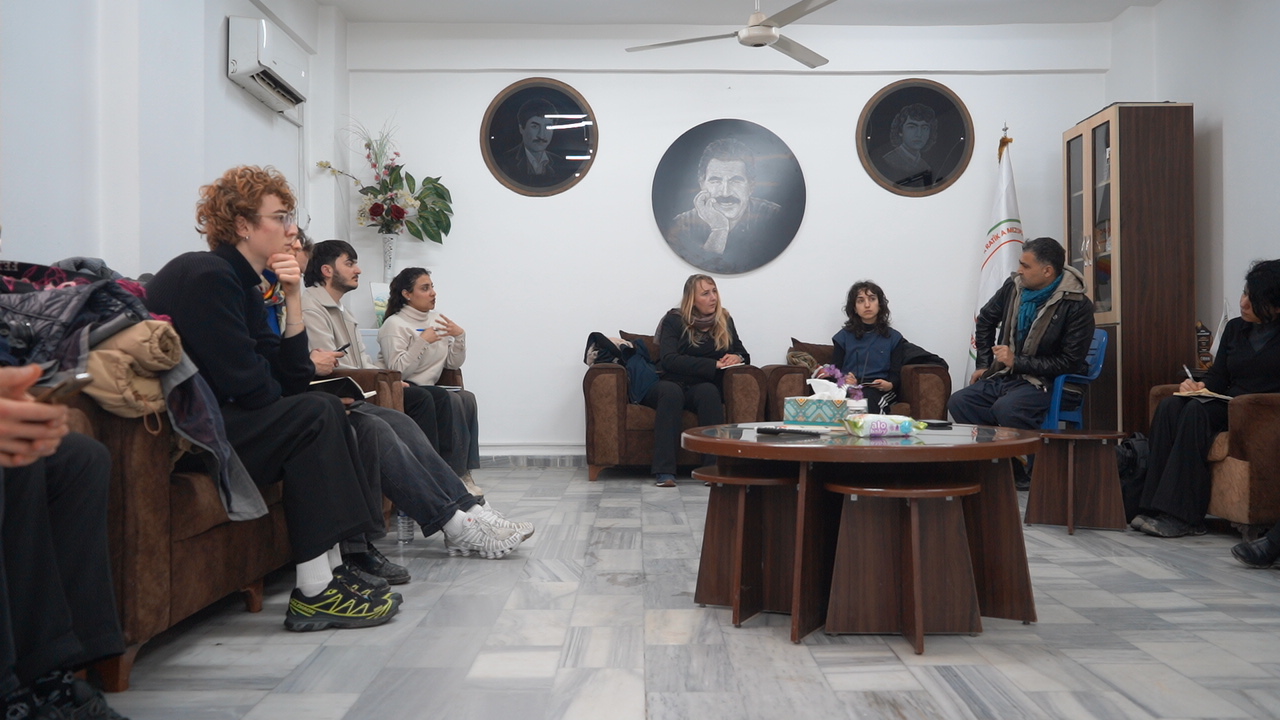
Kongra Star: Our voices here will reach no one. But you must carry them to the world
Rojava is a feminist project, a democratic experiment, and a promise.
“We are not fighting only for women’s rights,” a representative of Kongra Star told us. “We are fighting for language, for political rights, for minorities.” The co-chair system, the YPJ, the women’s villages, and the laws of the social contract – all of this is now under pressure.
Integration into a new Syria has been politically agreed upon, but in order for women’s rights to be anchored in the Syrian constitution, a political struggle is required. “We are fighting against an ideology that does not see us as human beings. How, then, can it see us as women?” explains a representative of Kongra Star.
Addressing women in the diaspora, their message is: “Capitalism makes our lives and our struggle here more difficult. Please do not become allies of this system. Our voices here reach no one. You must carry them to the world.”
The struggle for Rojava is not purely military and extends beyond Syria’s borders. Disinformation campaigns on social media and the adoption of jihadist narratives in major Western media outlets create an image that we as women and genderqueer people must firmly challenge by making the voices of our sisters in Rojava heard.
Culture in resistance
Cultural workers are also part of the resistance. It is not only about protecting Kurdish art, but about safeguarding Syria’s cultural diversity. “Here Muslims celebrate Newroz and Kurds celebrate Eid al-Fitr,” Ilyas Sido and Feryal Choli, the co-chairs of the Arts and Culture Commission in Qamishlo, explained to us.
Culture is part of the resistance. The revolution also began with videos, songs, and theater plays. “We fight with our art and sometimes also with weapons. But we simply want to make music,” artists in Qamishlo told us.
Jihadists are also aware of the power of art and culture and deliberately target artists in attacks. For example, singer Selman Ibrahim received death threats against himself and his four children because of a song. An artist from the film commune in Qamishlo explains: “If we are not free, we cannot create art. So, we must liberate our land.”
A new phase of resistance
Rojava is not merely a Kurdish project. It is a model for a democratic, pluralistic Syria and an alternative to nationalism and jihadism – one that needs our support more than ever.
The disappointment with former allies in the fight against ISIS is profound. Together, ISIS was defeated in 2015. In doing so, the Kurdish people paid the highest price. Eleven thousand sons and daughters were killed, and more than 20,000 were injured. Yet now the international community recognizes a jihadist as a legitimate president in order to pursue its regional interests.
Today, the international community accepts a political course that makes core values such as equality, pluralism, and democracy negotiable.
But Rojava would not be Rojava if it did not rely on the strength of the peoples themselves. Images of protests around the world give them strength, courage, and hope.
All those who stand by Rojava are thus part of the ongoing general mobilization. The struggle for the freedom of the people in Rojava is not purely military; it is also ideological, requiring diplomacy, political action, and our collective intervention in the public debate. It is up to people in Europe to influence their governments’ positions and to commit them to shared values.
The strengthening of jihadist ideologies threatens not only diversity and the people of Syria, but the freedom and security of the entire world.
Leave a Reply