
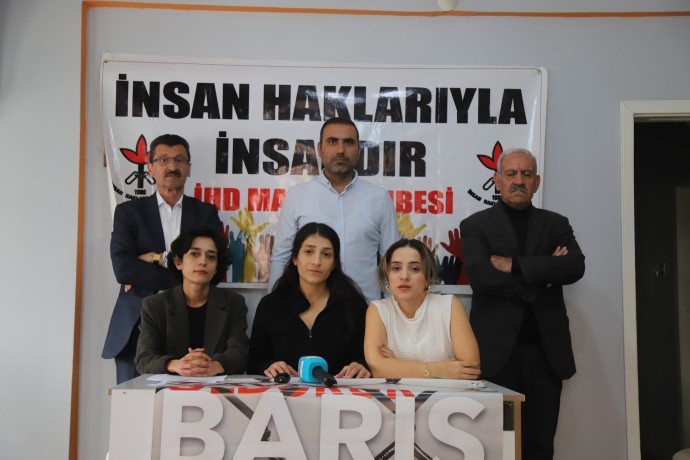
According to the Human Rights Association (IHD), a total of 53 suicides or suspicious deaths have been recorded in the Kurdish province of Mardin this year, according to a recent report presented by the local IHD section in Mardin on Tuesday. According to the report, 38 cases are suspected suicides, while another 25 are unexplained or classified as “suspicious” deaths of women. The survey is based on information from several districts in the province, including Kızıltepe, Artuklu, Derik, and Midyat.
Suicide also among minors and uniformed personnel
According to the IHD, most suicides were reported in Kızıltepe (14), followed by Artuklu (8), Derik (7), and Midyat (6).
Berivan Güneş, board member of the local IHD provincial branch, explained during the presentation of the report that the number of cases in relation to the population was particularly high in the district of Derik. Among those affected were minors and members of the Turkish police and military. One death involved an eleven-year-old child.
25 women died under unexplained circumstances
In addition to three documented femicides, at least 23 other deaths of women have been classified as suspicious this year. In four cases, the criminal investigation is ongoing, ten cases have been officially closed as “suicide,” and eleven others have died “of natural causes” according to the authorities. The IHD expressed doubts about the transparency of the investigations.
Criticism of inadequate investigation and lack of prevention
The Human Rights Association criticized the authorities for inadequate investigations into suspected suicide cases. Often, the circumstances surrounding the deaths are not systematically investigated. Whether and to what extent investigations take place depends in part on public pressure, such as reactions on social media. Berivan Güneş said: “Suicide prevention is not solely the responsibility of the health care system. It requires the involvement of families, schools, and society as a whole. A society-wide strategy is essential to identify mental health issues at an early stage and protect at-risk groups.
Social crises and lack of prospects as risk factors
An increase in suicide attempts has been observed, particularly among young people. In addition to family and psychological stress, structural problems such as unemployment, addiction to online gambling, drug use, and a lack of social spaces for self-fulfillment also act as risk factors. The IHD called for a comprehensive investigation of these underlying factors and targeted preventive measures. “The causes of suicide among young people must be taken seriously,” said Güneş. “Only through concrete political measures can children and young people be empowered and protected.”
Structural inequality and political repression in Kurdish provinces
The province of Mardin is one of the predominantly Kurdish-populated regions in southeastern Turkey. For decades, human rights organizations have reported structural discrimination in almost all areas of life: lower investment in education, jobs, and infrastructure; limited access to health care—especially psychological care—and high unemployment, particularly among young people.
Added to this is a systematic restriction of democratic rights and local self-government. Many elected mayors from the Kurdish left-wing party HDP or its successor DEM Party have been removed from office in recent years and replaced by state-appointed trustees. These measures, combined with investigations into local civil society organizations, are considered politically motivated and particularly affect structures that could enable social support and participation, including women’s and youth centers.
In this context, organizations such as the IHD see a connection between the increased number of suicides and suspected cases and the growing social isolation and lack of prospects in the region. The destruction of political and social networks and the lack of cultural recognition are also considered factors that can affect the mental well-being of young people.