
The 9th FilmAmed Documentary Film Festival came to an end in Amed (tr. Diyarbakır) yesterday evening with a moving closing ceremony. The five-day festival was organized by the city of Amed (tr. Diyarbakır) and the Payas (Kayapınar) district municipality in cooperation with the Middle East Cinema Academy and the organization “Sanatça” under the motto “Roots … True Legends by the Fire.” The focus was on social memory, artistic expression, and political positioning.
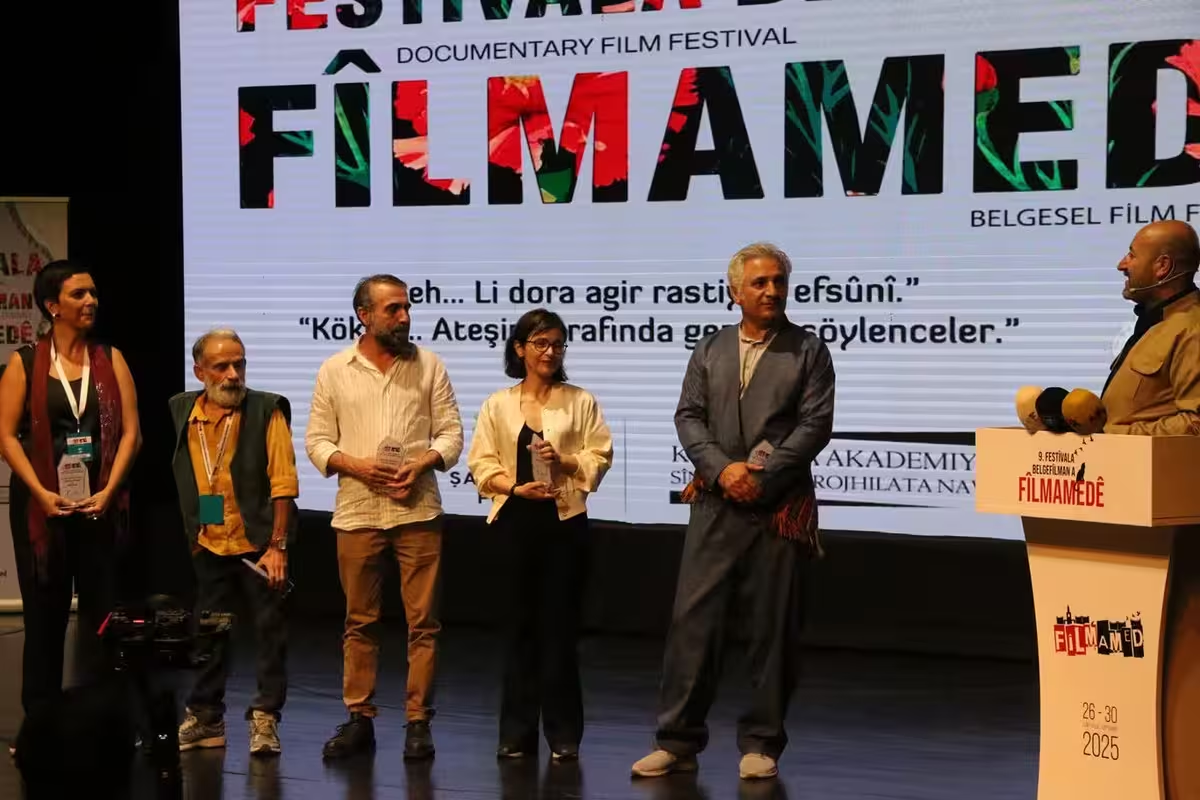
The festival at the Çand Amed Congress Center ended with the documentary film “Li Ber Siya Spîndarê” by Kenan Diler. Afterwards, 24 films were honored in a festive ceremony, including works on women’s rights, ecological struggles, political persecution, and cultural heritage.
“Documentary film is the memory of peoples”
In her opening speech, Dilan Toftik, representative of the festival organization, praised the role of film as a medium for resistance and collective memory. “FilmAmed has shown once again that documentary film is memory, the voice of the oppressed, lived truth,” she said. She emphasized the political responsibility of art: “The task of art is to name truth—and the task of truth is to enable freedom.”
Toftik also recalled the Turkish sociologist İsmail Beşikçi, who suffered a brain hemorrhage during the festival week and was awarded a solidarity prize.
Political voices and personal stories
In his speech, Kayapınar co-mayor Cengiz Dündar paid tribute to the stories that the festival brought to light: “We saw Rojin Kabaiş, Ayşe Gökkan, Uğur Kaymaz, and Nagihan Akarsel, the genocide in Dersim, the massacre in the Zîlan Valley, and many others on the screen. Our community does not forget, and we will continue this struggle.”
Co-mayor Berivan Gülşen Sincar emphasized how the festival acts as a counterpoint to cultural alienation: “We need art—and we need cinema—to combat attempts to separate people from their culture.”
Award-winning films
The most important award winners included:
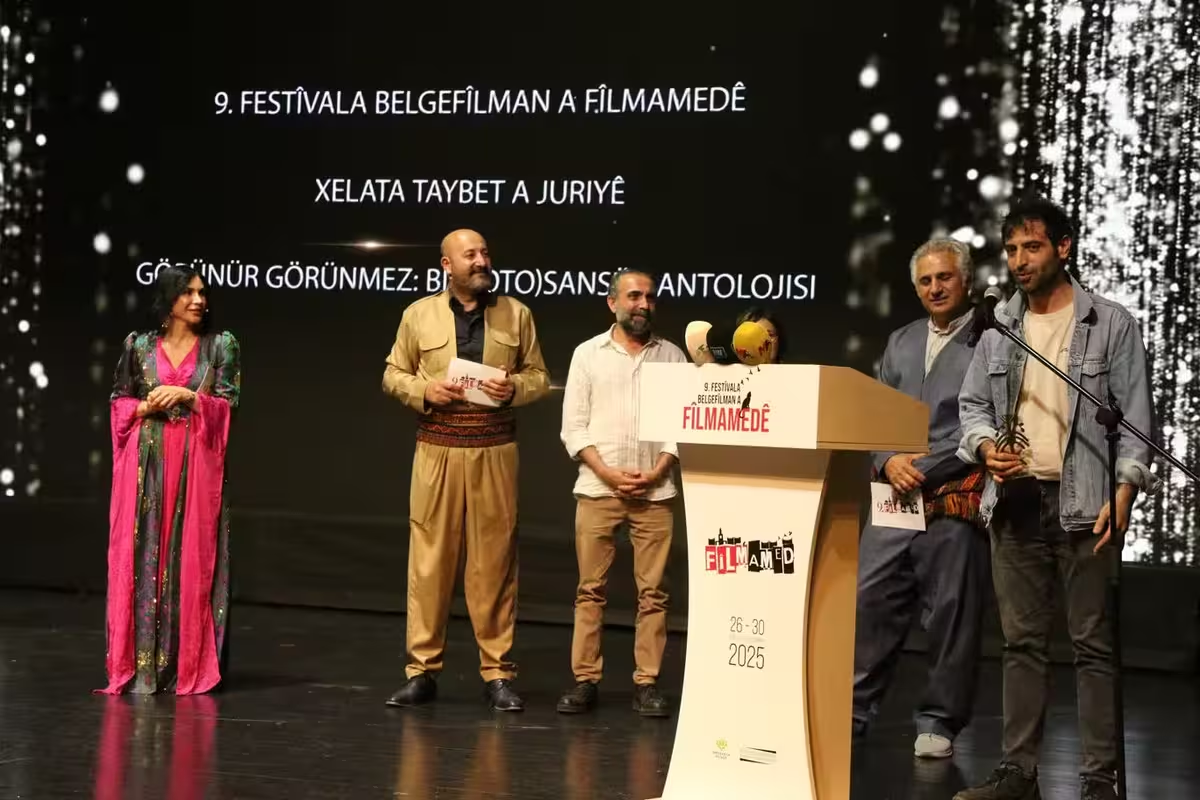
▪ Jury Special Prize: “Görünür Görünmez: Bir (Oto)sansürün Antolojisi” – accepted by Erhan Öz on behalf of the eight-member directing team.
▪ Orhan Doğan Prize for Truth and Justice: “Dargeçit” by Berke Baş
▪ Leyla Qasim Freedom Prize: “Shot the Voice of Freedom” by Zainap Entezar
▪ Hevsel Ecology Prize: “Habibullah” by Adnan Zandi
One of the most emotional moments was the presentation of the Kemal Kurkut Audience Award. The award went to journalist Abdurrahman Gök, who made public the fatal police shooting of 23-year-old student Kemal Kurkut during Newroz 2017 with his recordings—and is now facing criminal charges himself as a result.
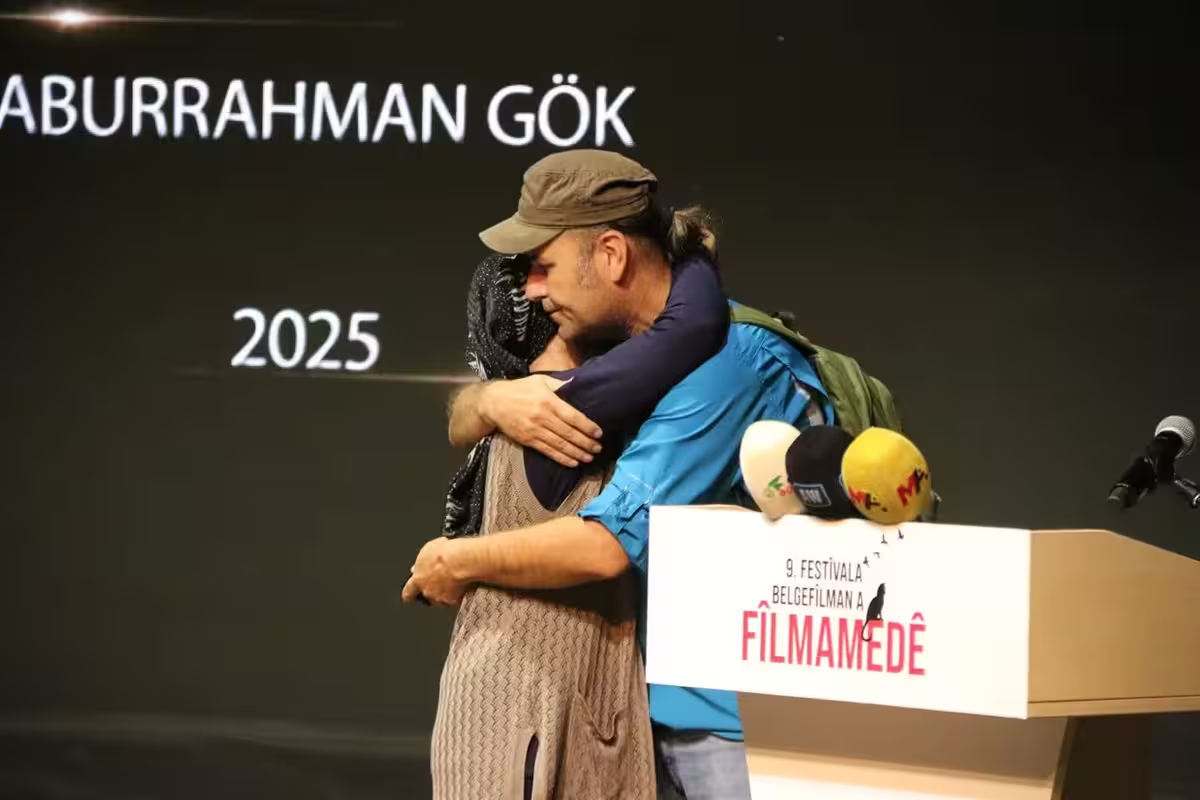
Kurkut’s mother, Sican Kurkut, presented the award to loud applause. “I lost my son, and I have been fighting for nine years. These murderers must be punished so that our children no longer die,” she said. The audience chanted loudly, “Kemal Kurkut is immortal” and “Şehid namirin” (Martys are immortal). In his acceptance speech, Gök said, “I didn’t make a film – but films are memories. Journalists preserve these memories, and that is precisely why they are murdered.”
Closing with powerful messages
Other awards went to directors Dilan Engin (İçimde Kurumuş Ot), Ahmet Petek (Ben û Sen), and Fatma Çelik (Gündem), among others. Director Fatin Kanat accepted the special prize on behalf of the documentary “Bizim İsmail” about İsmail Beşikçi.
The festival ended with a standing ovation and a clear signal that art, memory, and resistance are inextricably linked in Kurdish cinema.