
In Aleppo, representatives of the Kurdish-administered neighborhoods of Sheikh Maqsoud and Ashrafiyah, as well as the city council of the self-proclaimed Syrian transitional government, continued their talks on the implementation of the so-called April 1 Agreement. At the third meeting held on Friday, both sides agreed on a roadmap to improve public services and strengthen institutional cooperation.
The meeting took place in the Aleppo City Council building. Among those attending were the co-chairs of the Sheikh Maqsoud-Ashrafiyah People’s Council, Emine Bayram and Mistefa Şahîn, as well as the chair of the City Council, Muhammad Ali Al-Aziz. Legal and administrative committees of the People’s Council were also represented.
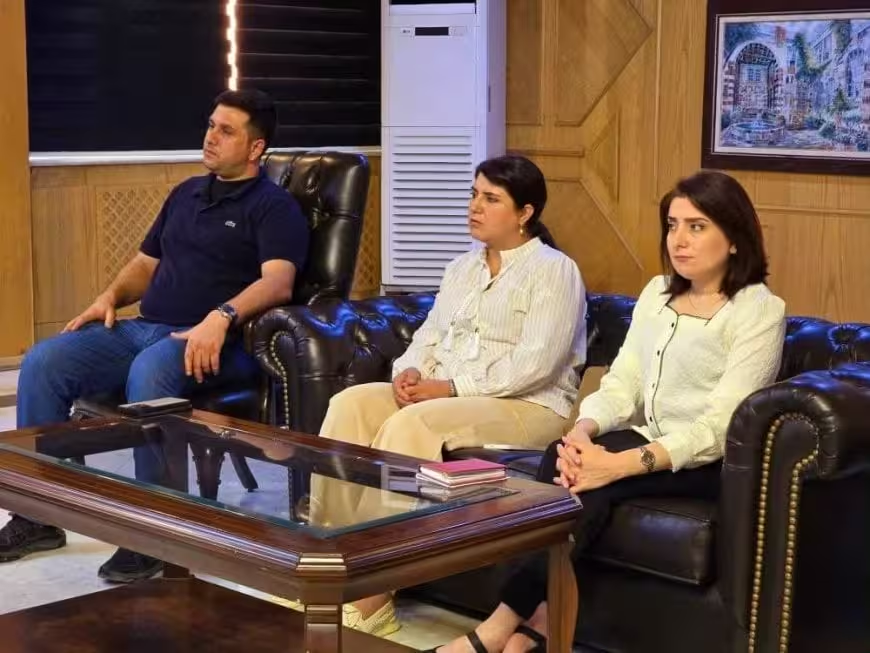 Representatives of self-government in the Kurdish neighborhoods
Focus on public services and institutional equality
The discussion focused on mechanisms for implementing the agreement and the current supply situation in both Kurdish neighborhoods, which have a largely autonomous municipal administration. Both sides emphasized the need for a joint work plan to address existing deficits in municipal infrastructure and social services.
A key issue was the equal integration of the neighborhoods of Sheikh Maqsoud and Ashrafiyah into urban decision-making processes. Particular focus was placed on Articles 11, 13, and 14 of the agreement, which stipulate the following points, among others:
▪ Institutional equality: All civil institutions in the neighborhoods should work in coordination with other neighborhoods of Aleppo without discrimination.
▪ Mutual support: Inter-municipal exchange should take place in future via the two municipal support organizations in Sheikh Maqsoud and Ashrafiyah.
▪ Equal representation: The two neighborhoods should have equal legal representation in Aleppo City Council, the Chamber of Commerce, and other public institutions.
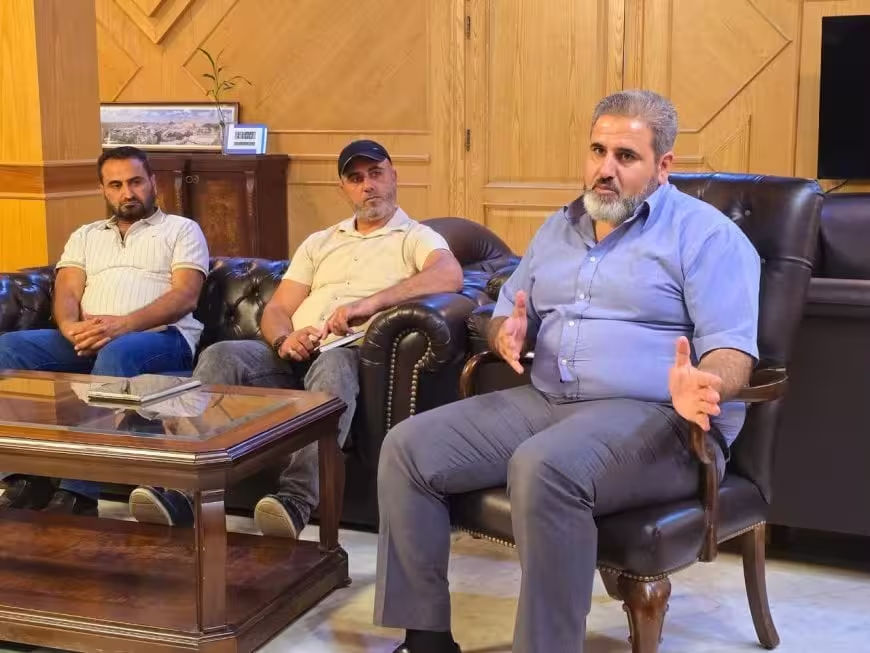 Members of the HTS government
The administrative and supply structures in both neighborhoods are to be continued in the form of joint committees together with the city council until a permanent agreement is reached.
The first coordination meeting under the agreement took place on April 15, with the second meeting following on April 21. Several working groups were set up at these meetings, but their activities had recently stalled. These were reactivated at the third meeting. Both sides intend to meet again in the coming weeks to develop a more binding structure and concrete mechanisms for implementing the agreements.