
The DEM Party-ruled municipality of Cizre in the Kurdish province of Şırnak has named a central street after the late politician Sırrı Süreyya Önder, who lost his life in May. Önder was a long-standing member of the Imrali delegation of the Peoples’ Equality and Democracy Party (DEM Party) and was considered a prominent voice in the Kurdish-Turkish dialogue process.
The name of İdil Street in the district center was changed to Sırrı Süreyya Önder Street at a municipal council meeting held in August. Today, a sign bearing Sırrı Süreyya Önder’s photograph was ceremonially hung at the entrance to the street, located at the Four Roads Junction. The ceremony was attended by DEM Party Şırnak MP Mehmet Zeki İrmez, Cizre Co-Mayors Güler Tunç Yerbasan and Abdurrahim Durmuş, representatives of the DEM Party Cizre district organization, and many others.
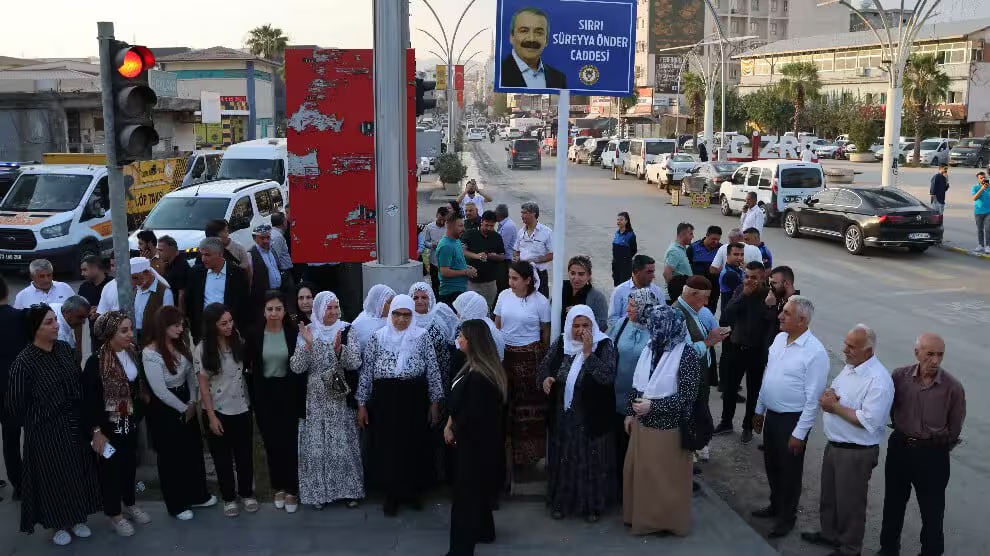
‘The legacy of a dignified peace’
Speaking at the ceremony, Cizre Co-Mayor Güler Tunç Yerbasan said, “We are here to keep the name of Sırrı Süreyya Önder alive. Önder fought a great struggle for his people. He left us the legacy of a dignified peace. Today, his name is not only on the streets of Cizre, but also in the hearts of millions of Kurds.”
‘We will continue his struggle until an honorable peace and equality are achieved’
DEM Party Şırnak MP Mehmet Zeki İrmez stated that Sırrı Süreyya Önder dedicated his life to an honorable peace, saying, “Mr. Önder always expressed his love for Cizre. Today, his name lives on in the streets of Cizre. Opposite this street is the name of Mr. Orhan Doğan. Both names lost their lives for an honorable peace. We will never forget them. Mr. Önder made a great effort in the Peace and Democratic Society Process. We will continue his struggle until an honorable peace and equality are achieved. We thank the municipality.”
Sırrı Süreyya Önder, who died on 3 May following a cardiac arrest on 15 April, was not only a politician, but also an author, director, and one of the most prominent representatives of the dialogue process between the Turkish state and the Kurdish movement. He was regarded as a mediator with cultural and political influence.